Falcons of the World: New Zealand Falcon

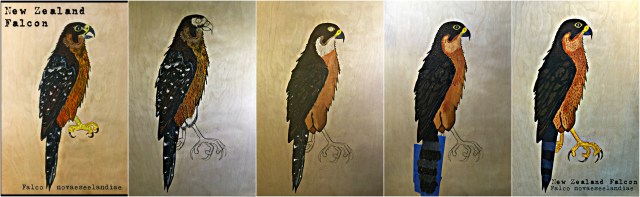
Falco novaeseelandiae

A powerful falcon endemic to New Zealand. They vary slightly in size, birds found in grasslands are larger than those found in forested areas. Also like many falcons females are larger than males.

They hunt birds and small mammals from a perch or from circular flight paths. Dropping on unsuspecting prey from above. Hitting prey with outstretched talons then severing the spinal column with a bite to the back of the head with their serrated bill. An effective hunter to say the least.

Aggressive hunters and defenders of their nests. Reports of falcons attacking humans who ventured too close to nesting areas are common. Much like goshawks in the northeast United States.

Nests are made in a variety of places. From on the ground in bushes all the way up high on cliffs or ledges from 20 to 100 feet. 2-4 eggs are laid at a time from September to December.

And if you’re keeping score at home, we’ve already looked at this bird about a year and a half ago. I wanted to go back and make some revisions. Having researched the bird more there were too many inaccuracies and I always love a chance to paint another unique falcon like Falco novaeseelandiae again. Thanks again for looking at birds with me.
 NZ redo strip

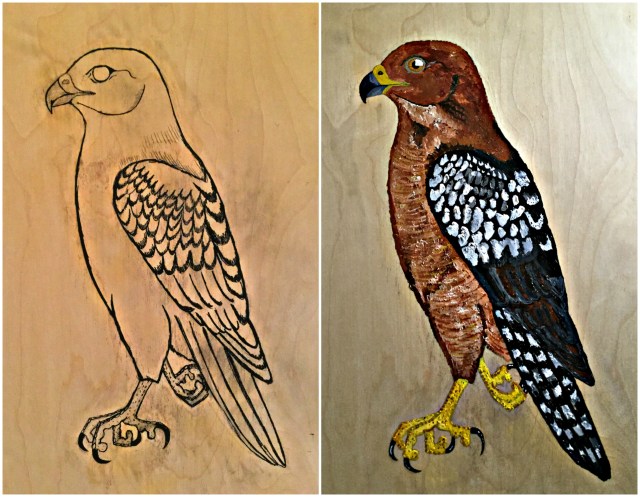
Hawks of the World: Red Shouldered Hawk

Buteo lineatus.

Definitely one of my favorite birds to watch and paint. Found across eastern North America and along the California coast south into Mexico. Hunting from a perch and on the wing. They take a variety of prey, ranging from small mammals, birds, insects, snakes and occasionally fish.  Found in forested and open areas. Nests are built of branches in treetops at 35-50 feet up. They lay usually 3 eggs per clutch.

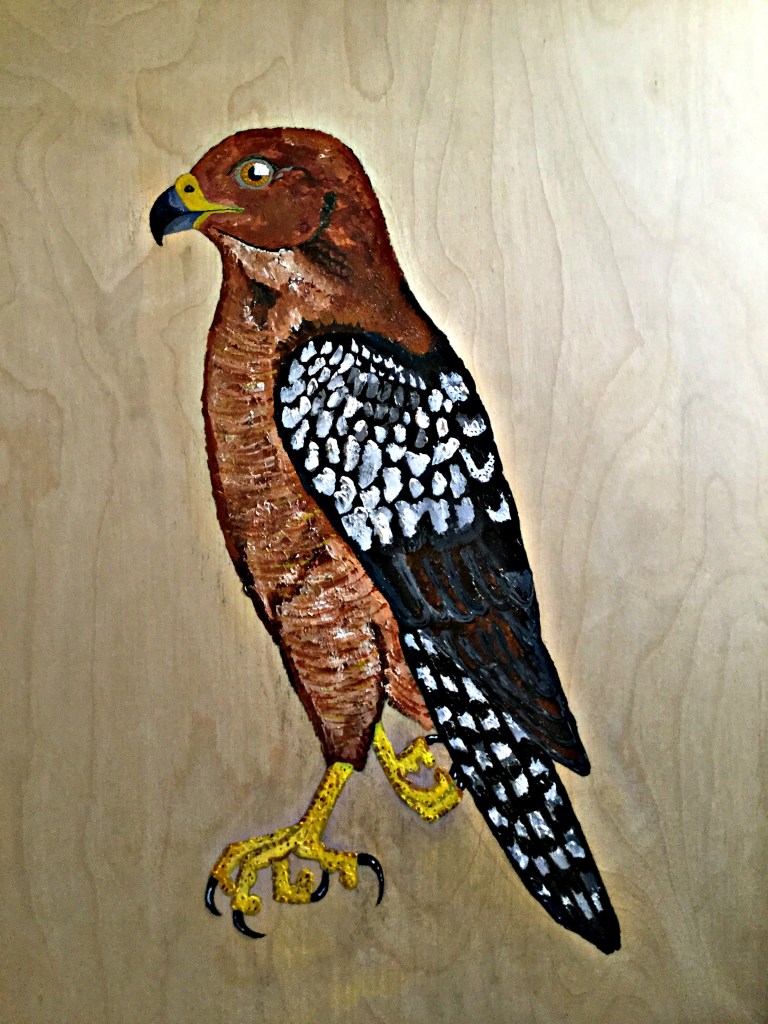
red shouldered hawks

RSHA map

Thanks a bunch for looking at birds with me. We covered this bird already here something like three years ago and I felt it was time to have another go at painting this bird as I’ve learned a lot since the last time. I’m glad I did, this was very fun to put together.
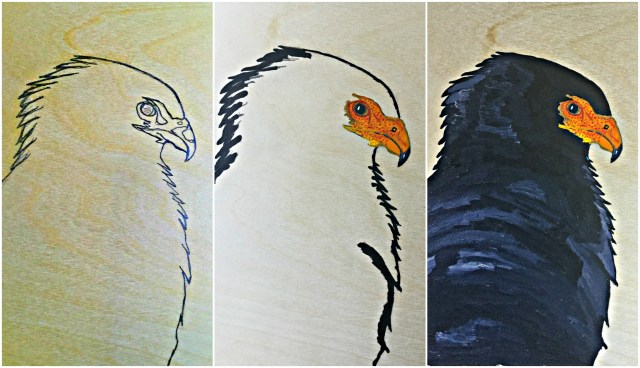
Raptors of Africa: Bateleur Eagle

Going back to African raptors. Here’s one of my favorites, Terathopius ecaudatus. Or Bateleur Eagle.  One of the more colorful species of snake eagles.

Despite their short tails they are quite capable of impressive aerial maneuvers while chasing prey. Found south of the Sahara desert in open areas with brush. They may cover as much as 200 miles a day searching for food. Riding thermals for up to 9 hours at a time. Their diet consists largely of snakes, lizards, rabbits, birds, antelope, and most of all roadkill and carrion.

This is a fun bird to paint, thanks for looking at birds with me.

bateleur profile rundoown

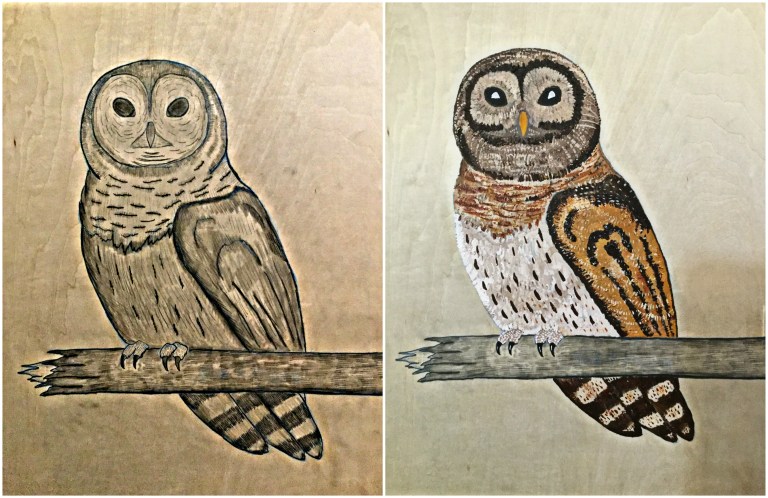
Owls of the World: Fulvous Owl

Fulvous Owl (Strix fulvescens) known also as Guatemala Barred Owl. Is found from Southern Mexico to Honduras. They prefer high-altitude tropical and temperate forests. Until recently it was just considered another race of Barred Owl (Strix varia). It’s coloration and song both resemble their Northern cousins. They’re quite elusive and proper study has still yet to be conducted to delve further. Fulvous Owls feed on small mammals, birds, reptiles, amphibians and insects. They lay 2-5 eggs per clutch and nest in holes in trees.

Thanks for looking at birds with me.

Fulvous TEXT.jpg

Owls of the World: Spotted Wood Owl.

Strix seloputo.

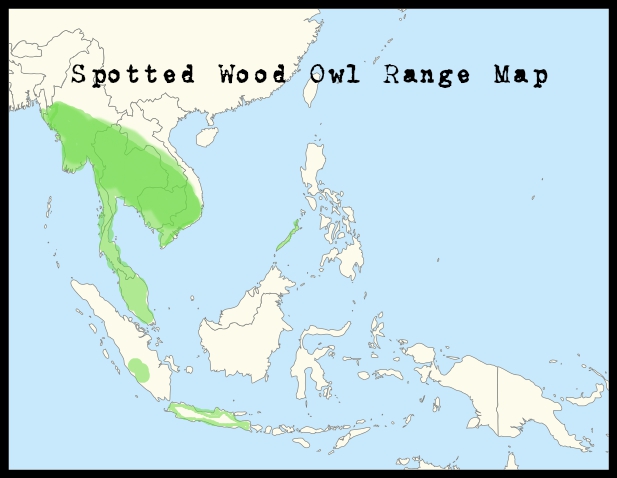
The Spotted Wood Owl is a medium sized owl. Averaging 18 inches tall. They are found across Southeast Asia. Its diet consists of rats, mice, small birds, and large insects. They roost by day, often close to the trunks of trees in dense foliage to avoid detection from other birds. They nest high up in trees, and lay up to three eggs at a time. They prefer nesting in partially clear forests and hunt in open areas. They can be found in populated areas, as well  as remote regions and areas not easily accessed like swamp forests and mangroves.

spo-woo-o-map
spotted-wood-owl-two
My plan was to hold off on painting more in this series until I was settled in Chicago. But I found this old panel while packing and cleaned it up and went for what could best be described as an encore. It was such a privilege to get to paint all these here in Oakland, and I’m very excited for the projects to come in Chicago. Another huge thank you to all my friends and family for all the support. My goal with all this is simple; Share the birds of the world with you all. Now my easel is packed and my brushes too. Stay tuned for a Bateleur Eagle, found in Zimbabwe, Africa. Coming to you from the city by the lake.

And once more for good measure, thank you for looking at birds with me.
Owls of the World: Snowy Owl

Bubo scandiacus.

One of the easiest to identify owls of the world. Found in the northernmost regions of the planet. The Snowy Owl is truly a unique owl, in its plumage and hunting habits.

Largely diurnal, it does most of its hunting by day. Taking small mammals, mostly lemmings, but also ptarmigans, rabbits, and mice. One snowy owl can take as many as 1,600 lemmings per year.
They hunt from a perch and pursue prey, capturing them with their massive talons. They can also locate prey by ear, even through thick grass and snow.

They lay 3-11 eggs depending on availability of food and have been known to be extremely defensive of their nests. Fighting off wolves and any other predators.
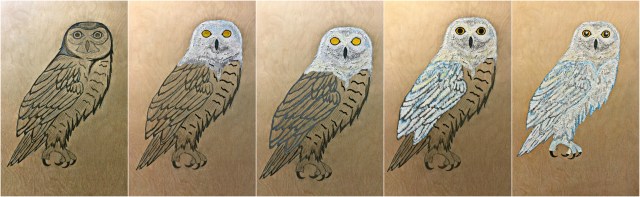
snowy-all
This owl has been on my to-do list for years. It wasn’t until this fall that I felt I had the technical skills to get it done like the others. I used yellows and blues to add some dynamic. This is likely my last owl that I’ll get done here in Oakland. My next few projects will be African raptors, and those will be coming to you from Chicago, Illinois.
I am forever grateful for the time I’ve been able to spend in Oakland, I underestimated its potential, but learned quickly of its heart, passion, and beauty.
I’m excited for the art and adventures to come in the city by the lake.
A heartfelt thank you to all my California friends who have encouraged me to reach this point, both as an artist and as a man.
Thanks for looking at birds with me again. Lots more to come.

Thank you,

Farnco