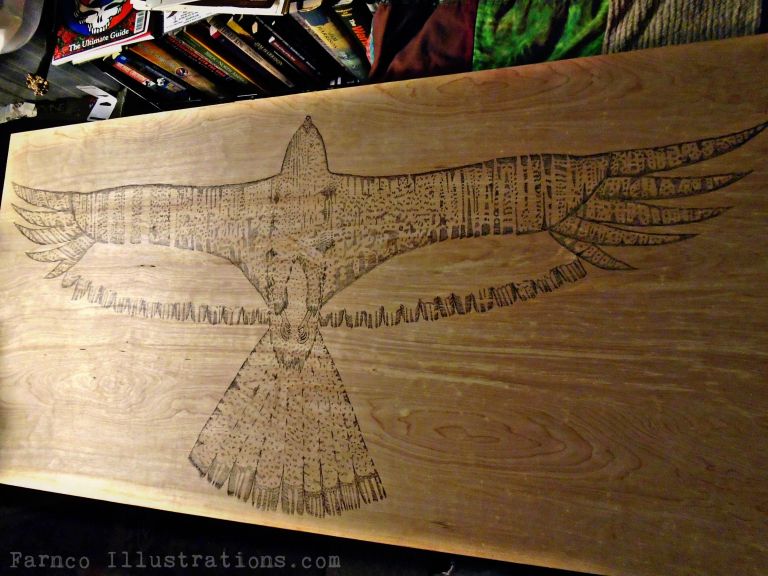
Birds of Prey of the World (A Collection)

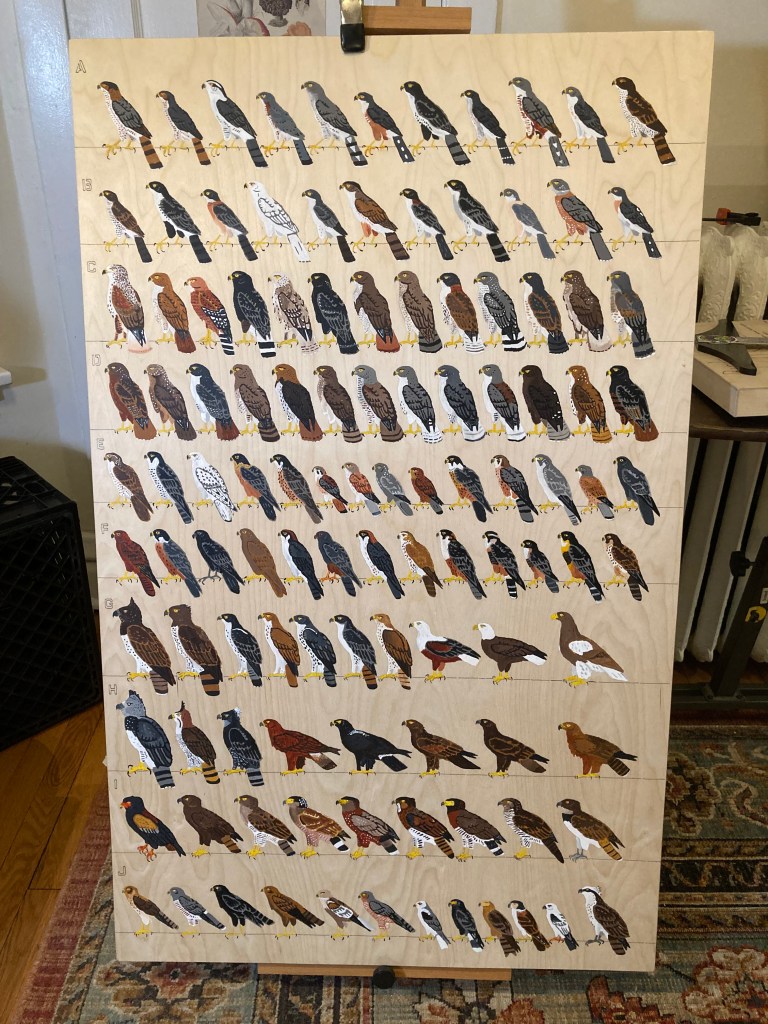
After the last few field-guide inspired panels, I got started on my largest undertaking yet in my 10+ years of exploring birds and painting. I have long wanted to take my love for field guide artwork and layout a large collection of species on one panel. 

My father hand crafted for me this massive (compared to my usual 16×20”) 30” x 40” panel. He handed it off to me in December of 2021 and I began selecting and doing the layout math. 

When selecting the species for this project I came up with a number of species from every continent that birds of prey are found on, that being all but Antarctica. 

It came out to 114 species of birds in all.  

22 hawks from the Accipiter Genus,

26 hawks from the Buteo genus,

27 species of falcons,

18 species of eagles,

9 species of snake-eagles,

6 species of harriers,

5 species of Kites,

And one Osprey. 

I began the pencil work in the first week of February and painting began at the end of March. Then over the course of the following months with acrylic paint I brought to life on the panel all 114 species. 

To call the process a learning experience is an understatement. I poured through dozens of reference photos and books for each and every bird. Getting to know each one as best as I could. 

It’s not just the colors and look of the birds I was after but rather everything I can find on diet, habitats, and range. 

My biggest take away is how connected the world is through its birds. 

The Eleonora’s falcon you watched hunting birds on the shores of a beach in Madagascar today was hunting shore birds in Italy six months ago. (That’s a 4,715 mile flight). 

The Broad-wing hawk you saw in that Canadian forest last summer? It’s spending the winter in Argentina. (A cool 7,085 mile flight). So it stands to reason that habitat loss anywhere in between deeply affects all these birds and their prey animals. 

Aside from all the information I learned about the various species, it was an excellent lesson in patience and enjoying the process. Theres no good way to paint this many species in the detail I want and do it fast.  So I worked slowly and enjoyed the long haul of the undertaking each hour at a time and each feather at a time. 

The mediums I used on this project were pencil, pen, and acrylic paint. 
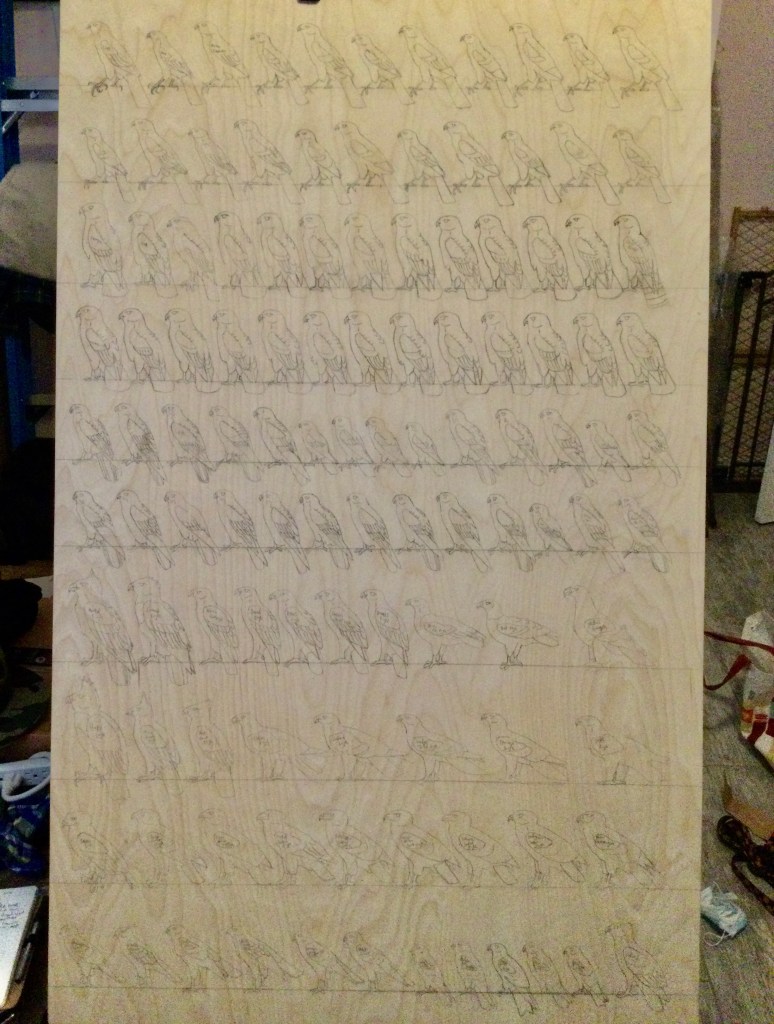
 

And the master “Who’s Who” list. from left to right:

A: 

Accipiter cooperii, Accipiter striatus, Accipiter gentilis, Accipiter badius, Accipiter ovampensis, Accipiter castanilius, Accipiter melanoleucus, Accipiter minullus, Accipiter tachiro, Accipiter francesiae, Accipiter henstii. 

B:

Accipiter madagascariensis, Accipiter melanochlamys, Accipiter erythrauchen, Accipiter novaehollandiae, Accipiter chionogaster, Accipiter chilensis, Accipiter albogularis, Accipiter poliogaster, Accipiter rufitorques, Accipiter fasciatus, Accipiter trinotatus.

C:

Buteo regalis, Buteo jamaicensis, Buteo lineatus, Parabuteo leucorrhous, Buteo hemilasius, Buteo albonotatus, Buteo ventralis, Buteo platypterus, Buteo albigula, Buteo nitidus, Buteo brachyurus, Buteo lagopus, Rupornis magnirostris.

D:

Buteo augur archeri, Buteo solitarius, Buteo augur, Buteo brachypterus, Buteo auguralis, Buteo swainsoni, Buteo ridgewayi, Buteo poecilochrous, Buteo exsul, Buteo polyosoma, Buteo galapagoensis, Buteo oreophilus, Buteo rufofuscus.

E:

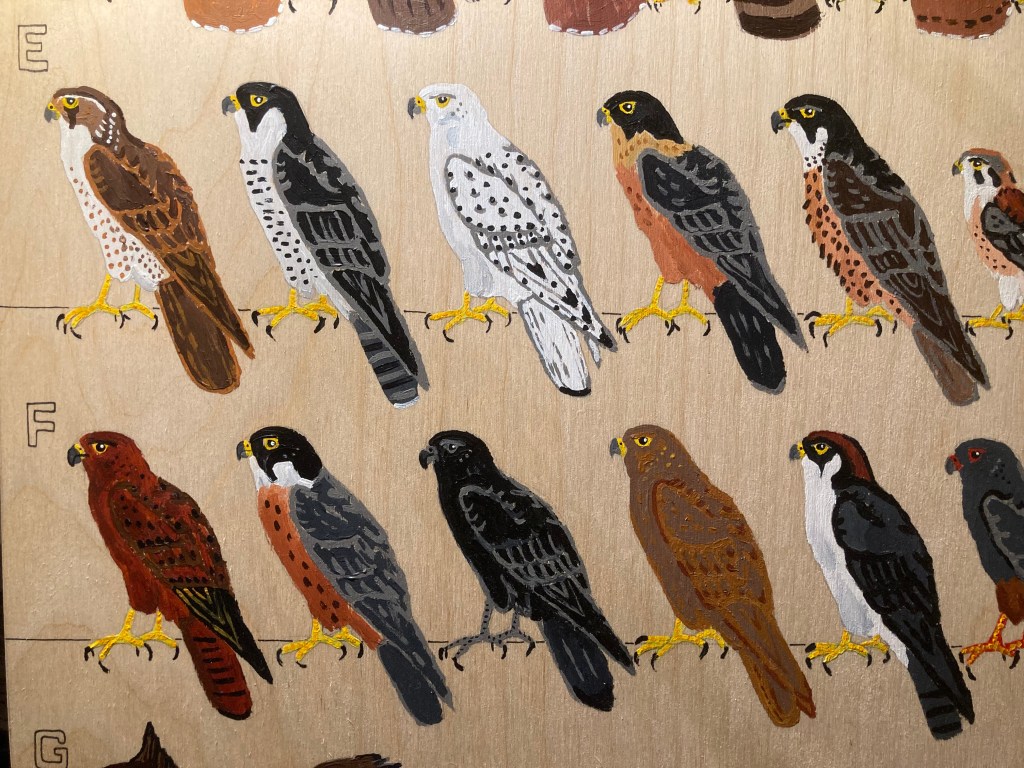
Falco mexicanus, Falco peregrinus, Falco rusticolus, Falco cuvierii, Falco eleonorae, Falco sparverius, Falco cenchroides, Falco ardosiaceus, Falco moluccensis, Falco subbuteo, Falco columbarius, Falco hypoleucos, Falco tinnunculus, Falco concolor

F:

Falco alopex, Falco longipennis, Falco subniger, Falco berigora, Falco chicquera, Falco biarmicus, Falco jugger, Falco cherrug, Falco fasciinucha, Falco femoralis, Falco rufigularis,  Falco deiroleucus, Falco novaeseelandiae

G:

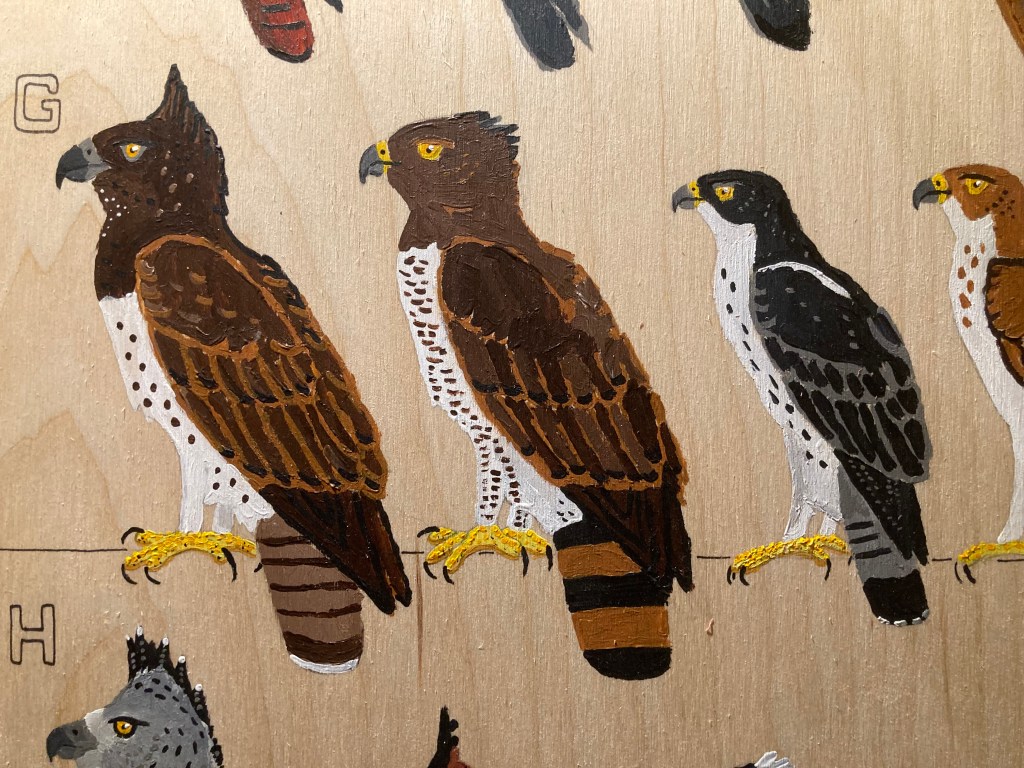
Polemaetus bellicosus, Aquila spilogaster, Hieraaetus pennatus, Hieraaetus ayresii, Aquila africana, Aquila fasciata, Haliaeetus vocifer, Haliaeetus leucocephalus, Haliaeetus pelagicus. 

H:

Harpia harpyja, Spizaetus ornatus, Spizaetus tyrannus, Aquila chrysaetos, Aquila verreauxii, Aquila audax, Aquila gurneyi, Aquila nipalensis.

I:

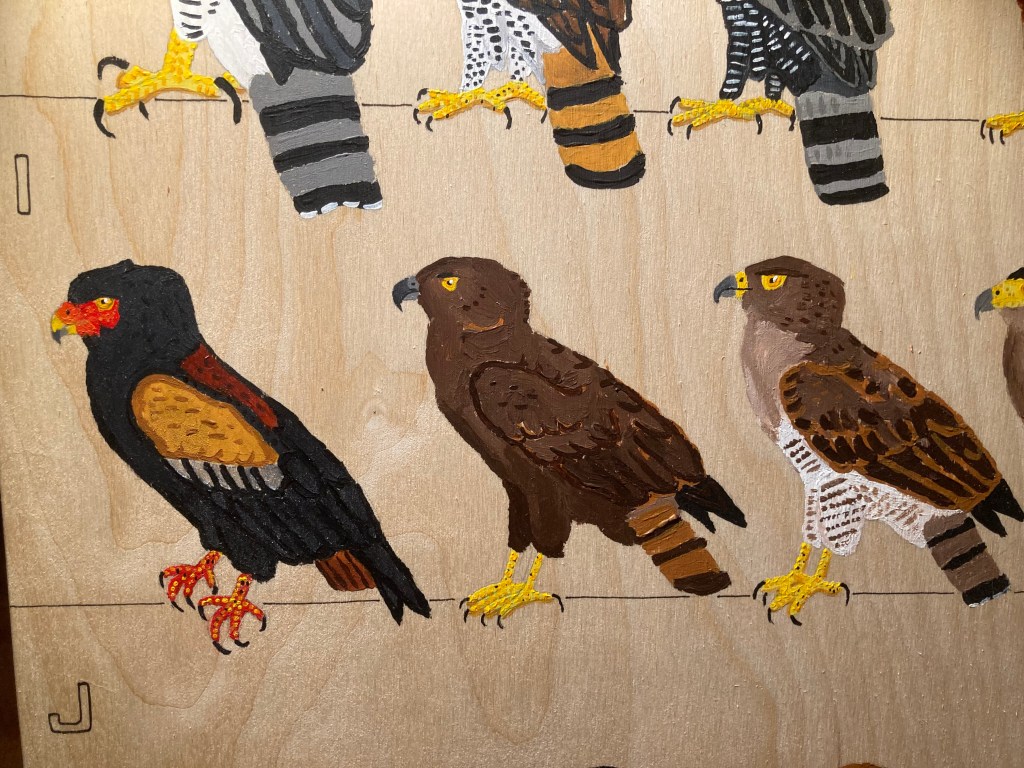
Terathopius ecaudatus, Circaetus cinerascens, Circaetus fasciolatus, Spilornis cheela, Spilornis holospilus, Dryotriorchis spectabilis, Spilornis rufipectus, Eutriorchis astur, Circaetus pectoralis. 

J:

Circus hudsonius, Circus cinereus, Circus maurus, Circus ranivorus, Circus aeruginosus, Circus assimilis, Elanus leucurus, Royrhamus socrabilis, Lophoictinia isura, Gampsonyx swainsonii, Ictina mississippiensis, Pandion haliaetus.

Thank you so much for looking at birds with me.

So many more to come. 

My two primary reference books were:

Weick, F., and L.H Brown. Birds of Prey of the World: A Coloured Guide to Identification of All the Diurnal Species Order Falconiformes. Paul Parey, 1980.

Ferguson-Lees, James, and David Christie. Raptors of the World. A & C Black Publishers Ltd, 2010.

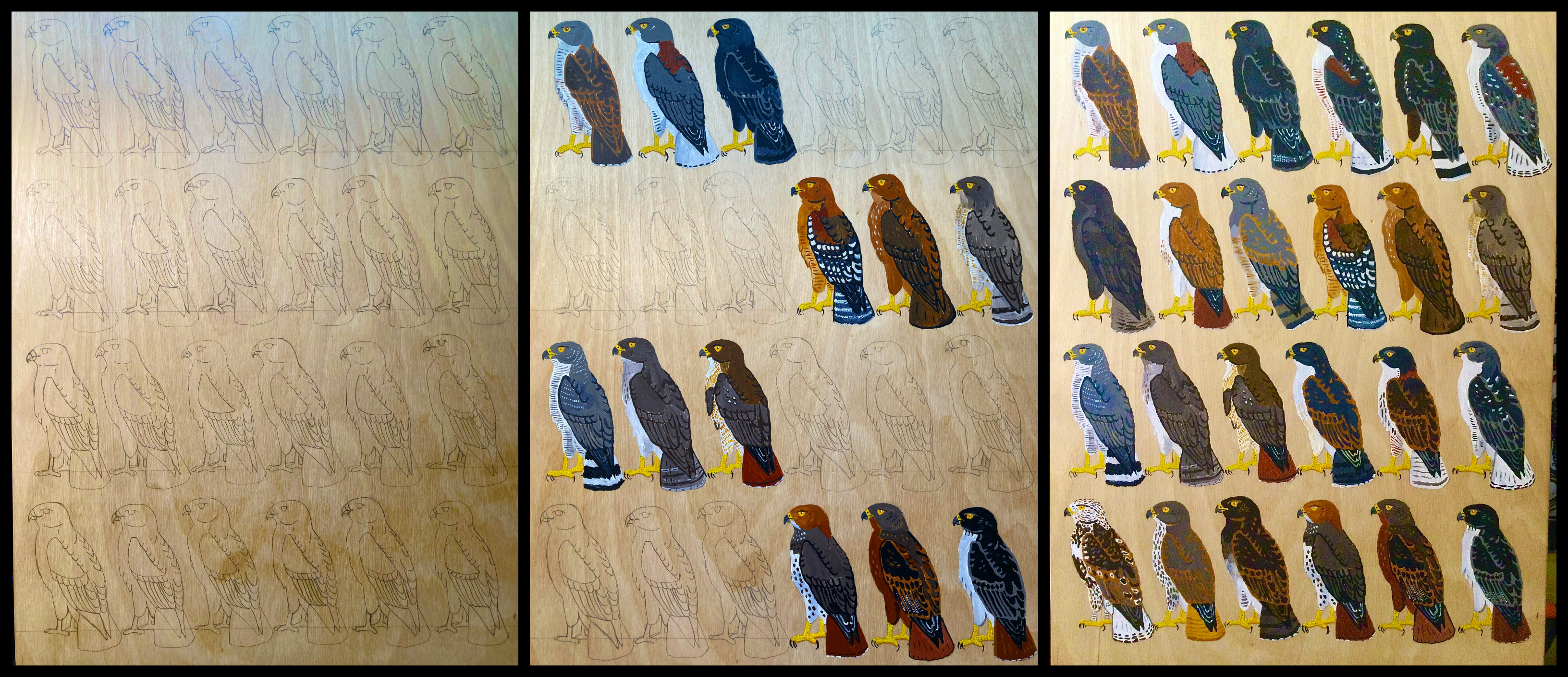
Hawks of the Buteo genus (mostly)

Well it took me two and a half months but it was a fun project and I really learned a lot. The first lesson was how much changes in taxonomy over ten years. I started his panel calling it “Hawks of the Buteo genus” and I was using a reference guide from 2001. Well not all of these are grouped in the Buteo genus anymore but that didn’t spoil my fun any. 

So here’s our panel starting at the top left:

Ridgway’s Hawk (Buteo ridgwayi), Gurney’s Hawk (Buteo poecilochrous), Zone-Tailed Hawk (Buteo albonotatus), White-Tailed Hawk (Geranoaetus albicaudatus), White-Rumped Hawk (Parabuteo leucorrhous), Red-Backed Hawk (Buteo polyosoma).

Galapagos Hawk (Buteo galapagoensis), Red-tailed Hawk (Buteo jamaicensis), Roadside Hawk (Buteo magnirostris), Red-Shouldered Hawk (Buteo lineatus), Hawaiian Hawk (Buteo solitarius), Broad-Winged Hawk (Buteo platypterus).

Gray-Lined Hawk (Buteo nitidus), Swainson’s Hawk (Buteo swainsoni), Rufous-Tailed Hawk (Buteo ventralis), Short-Tailed Hawk (Buteo brachyurus), White-Throated Hawk (Buteo albigula), Juan Fernández Hawk (Buteo exsul).

Rough-Legged Hawk (Buteo lagopus), Mountain Buzzard (Buteo oreophilus), Madagascar Buzzard (Buteo brachypterus), Red-Necked Buzzard (Buteo auguralis), Archer’s Buzzard (Buteo archeri), Augur Buzzard (Buteo augur).

This was a very fun and challenging project, from figuring out how to fit 24 hawks on one panel to laying them out in an orderly fashion. The first three rows are all found in North and South America. Row four finds a mix of Eurasian and African. 

If anything this panel demonstrates the extensive biodiversity of North and South America and also my stubbornness in cramming as many hawks onto one page as possible. 

Thank you so much for looking at birds with me.

My reference guide was: 

James, and David. Raptors of the World. Houghton Mifflin Harcourt, 2001.

Raptors of the World: Ornate Hawk-Eagle

Spizaetus ornatus

A medium size eagle found in tropical forests of Central and South America.  Aptly named for its unique coloration and head crest of black feathers.

Prefers to hunt from a perch or high glide in thick tropical forests. The dinner menu for Spizaetus ornatus is a variety of small mammals, birds, and reptiles.

ornate haekeagle processB2

My favorite raptor of South America (There’s some solid competition there too).  I’ve made a few paintings of this one before but until now I feel I hadn’t captured its nuances. Then again having never been on the same continent as one, it’s hard to say. Thank you so much for looking at birds with me.

It was her again, but it was all right.

She promised me poetry on my grave.
Or at the very least, to try and behave.
 
And as she stood there in the rain she made good.
I write my own poetry on a piece of wood.
 
Time yet not for a bed of dirt.
her words only echo they do not hurt.
 
Sifting through these ashes I found the words,
Bringing to page the largest of birds.
 
In my noblest of efforts to think ahead of my pen.
My thoughts drift back to her again.

From waves of grain to the golden coast.

I used to pretend I could find my way home by the moss on the trees, or the leaves of the compass plant in the prairie. That was my Illinois. A grassland spotted with rivers and forests. An existence on the verge of a great adventure.

But that was Illinois and this is California.

I don’t recognize many of the plants here, and I don’t know any wives tales about them. I can’t find any discernable moss on any part of a tree around here.

There are a lot of long nights of highway driving between where I write these words, and where I was born to do so. highway homesick blues.

Hearts and ideas going by like the tops of the telephone poles through the window while you lay on your back across the whole backseat while your friend drives.

Driving across the country I grew up in helped me fall in love with a whole planet.

To be embraced and cared for. Fragile like eggs in a backpack full of hatchets.

I’d heard it sung:

“Picture a bright blue ball,
Just spinnin’, spinnin, free.
Dizzy with the possibilities.”

Too look over my shoulder tonight at Illinois and all it taught me, It leaves me feeling blessed for this opportunity to try my hand at an age old craft, and with my time, give something to the world to help it see it’s own beauty tied into the thread of our life in Earth’s natural kingdom. And California seems a fine place, with great biodiversity…..and The Grateful Dead are from here so yeah.

redtailprogress2.jpg

Turn the page, a dream in time-lapse.

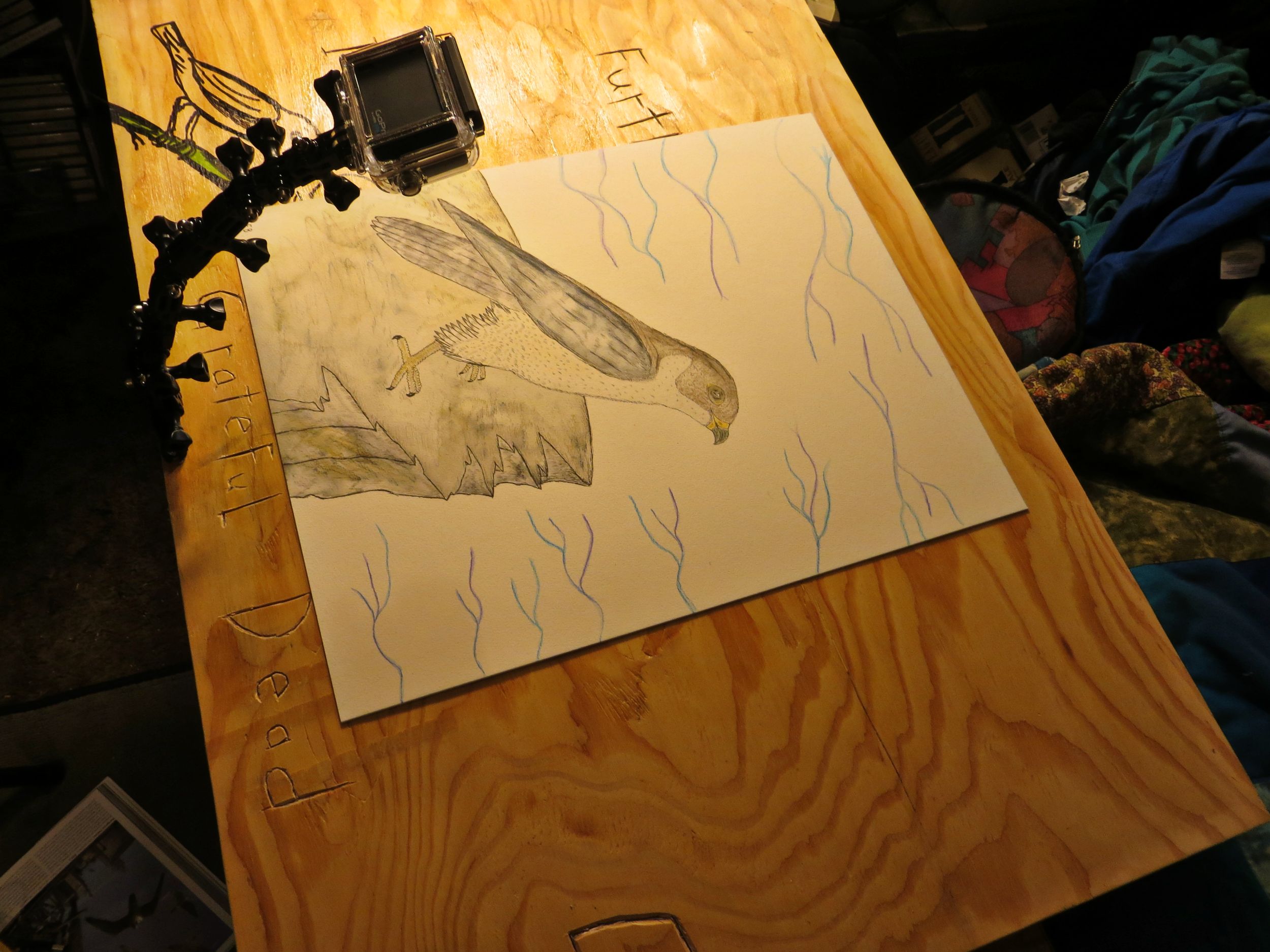
goproaftercolor.jpg

Messing around with a new-to-me technology. Over the coming weeks I’ll be assembling a series of time lapse recordings of several different drawing projects.

I spend a large amount of my free time behind this sheet of plywood drawing out what dreams or visions I can catch in my head.

The time I spend here brings me peace when I’m at unrest.

Here my roots come up through the asphalt of California.

I’m always interested in a way to further share my perspective on the important beauty of our natural world.

This shows promise.

DCIM100GOPRO