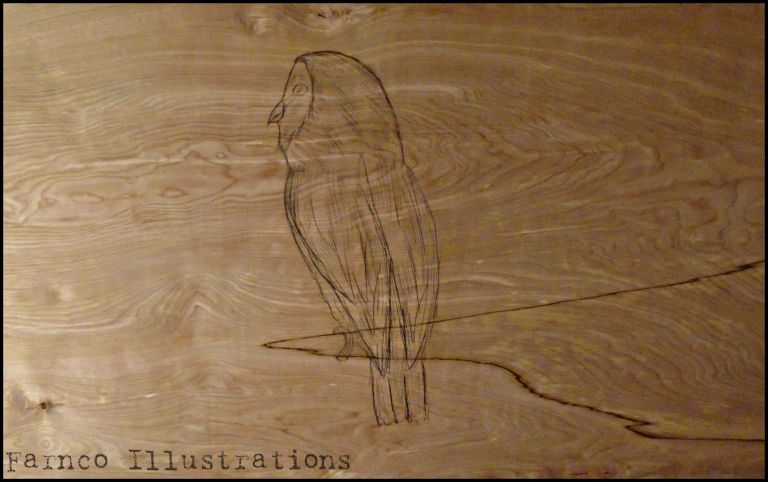
Owls of the World

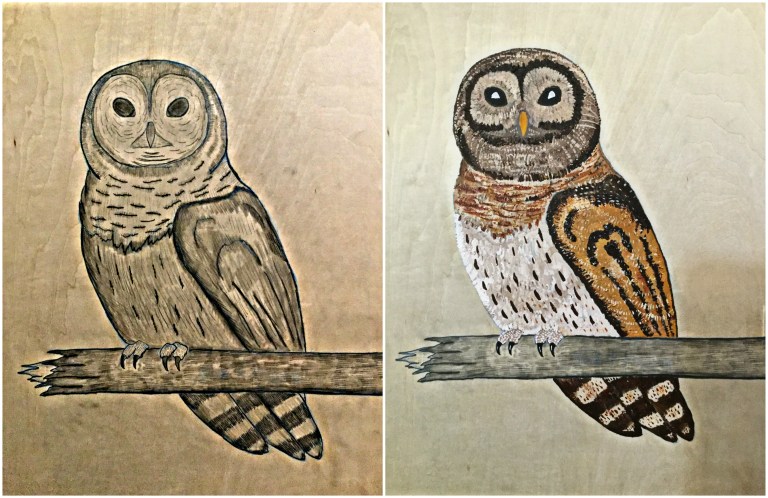
Tyto alba.

The most widespread species of owl on the planet. They’re found on every continent except Antarctica. The barn owl diet consists primarily of small rodents. Habitats range from forested, urban, and agricultural areas. 

It as a joy to paint a larger portrait after finishing the year-long panel project. To help the light color of the Barn Owl stand out, I used a blue wash on the wood panel. 

Owls of the World: Black-banded Owl

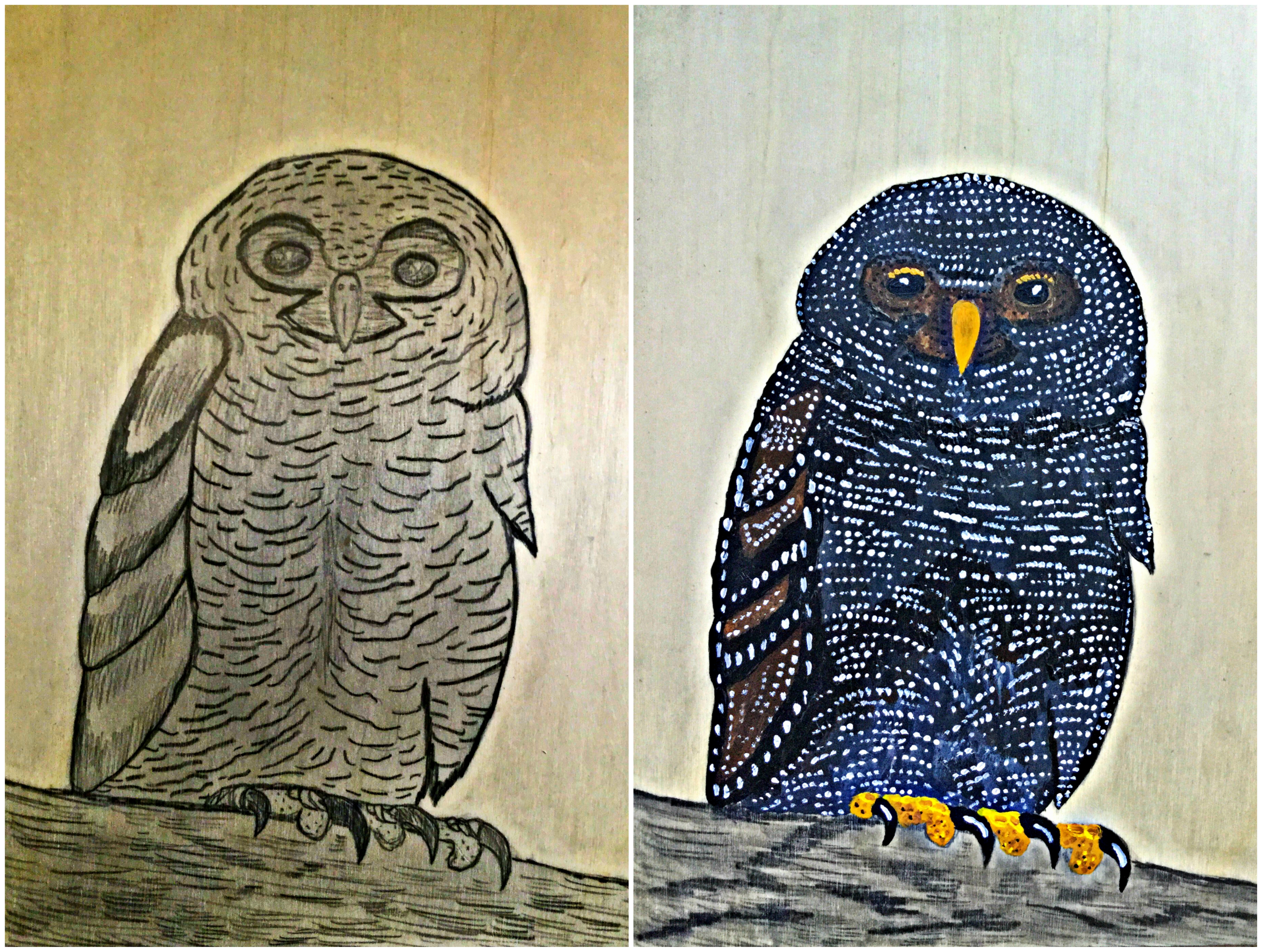
Here’s a Black-banded Owl, Strix huhula.

These owls have an extensive range in northern and central South America. Preferring tropical and subtropical forests. Also found in banana and coffee plantations. They feed at night primarily on insects such as mantises, beetles, and locusts that it catches in flight. Little is known of breeding and nesting habits. They grow to be 12-14 inches tall with a wing span of 16 inches.

Black-banded pair

Owls of the World: Fulvous Owl

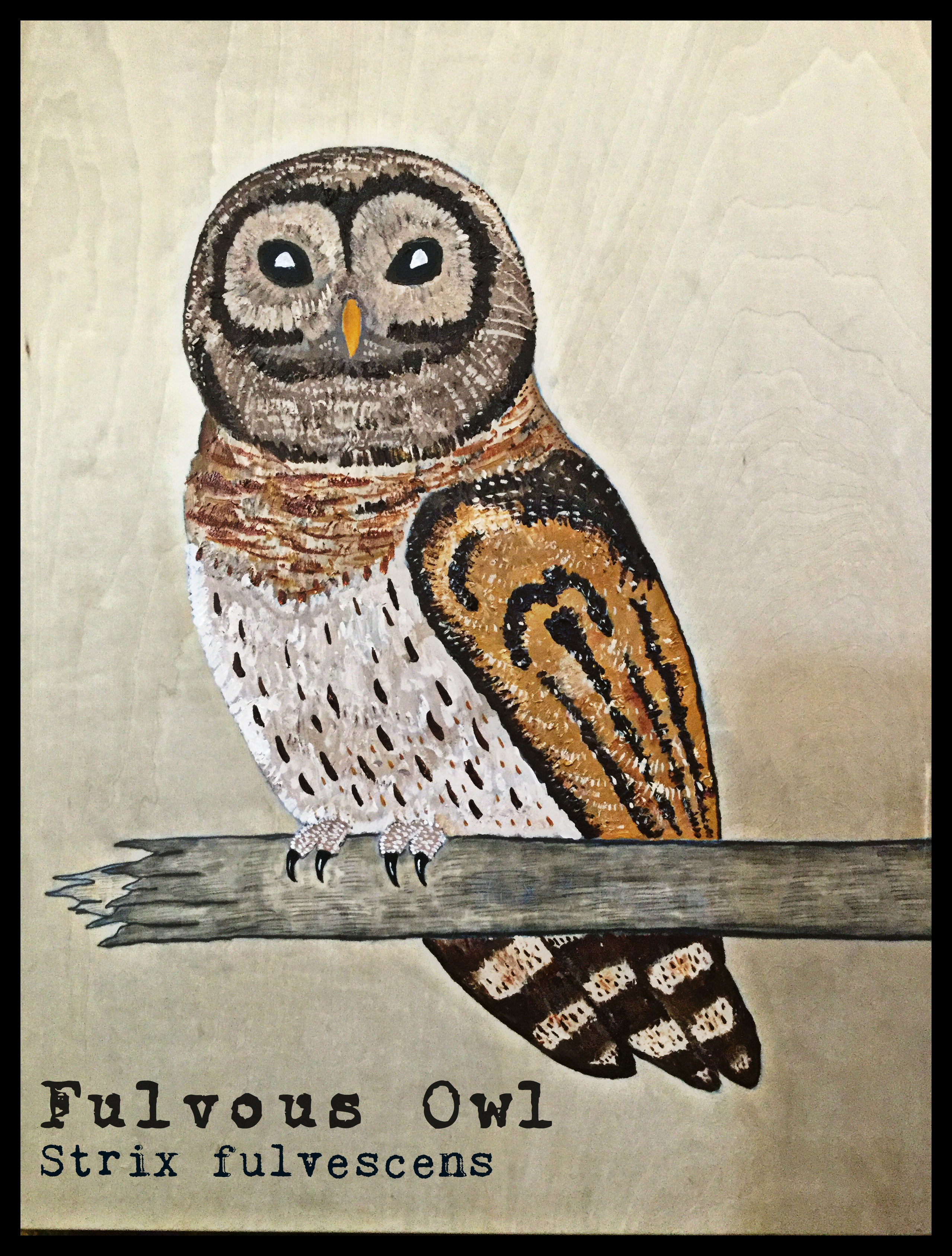
Fulvous Owl (Strix fulvescens) known also as Guatemala Barred Owl. Is found from Southern Mexico to Honduras. They prefer high-altitude tropical and temperate forests. Until recently it was just considered another race of Barred Owl (Strix varia). It’s coloration and song both resemble their Northern cousins. They’re quite elusive and proper study has still yet to be conducted to delve further. Fulvous Owls feed on small mammals, birds, reptiles, amphibians and insects. They lay 2-5 eggs per clutch and nest in holes in trees.

Thanks for looking at birds with me.

Fulvous TEXT.jpg

Owls of the World: Spotted Wood Owl.

Strix seloputo.

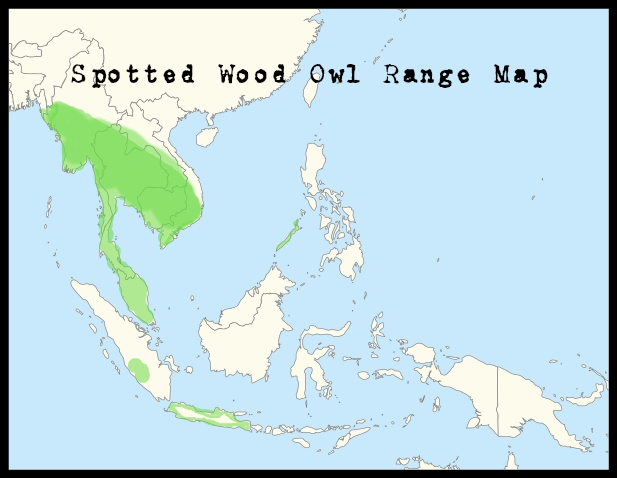
The Spotted Wood Owl is a medium sized owl. Averaging 18 inches tall. They are found across Southeast Asia. Its diet consists of rats, mice, small birds, and large insects. They roost by day, often close to the trunks of trees in dense foliage to avoid detection from other birds. They nest high up in trees, and lay up to three eggs at a time. They prefer nesting in partially clear forests and hunt in open areas. They can be found in populated areas, as well  as remote regions and areas not easily accessed like swamp forests and mangroves.

spo-woo-o-map
spotted-wood-owl-two
My plan was to hold off on painting more in this series until I was settled in Chicago. But I found this old panel while packing and cleaned it up and went for what could best be described as an encore. It was such a privilege to get to paint all these here in Oakland, and I’m very excited for the projects to come in Chicago. Another huge thank you to all my friends and family for all the support. My goal with all this is simple; Share the birds of the world with you all. Now my easel is packed and my brushes too. Stay tuned for a Bateleur Eagle, found in Zimbabwe, Africa. Coming to you from the city by the lake.

And once more for good measure, thank you for looking at birds with me.

Owls of the World: Snowy Owl

Bubo scandiacus.

One of the easiest to identify owls of the world. Found in the northernmost regions of the planet. The Snowy Owl is truly a unique owl, in its plumage and hunting habits.

Largely diurnal, it does most of its hunting by day. Taking small mammals, mostly lemmings, but also ptarmigans, rabbits, and mice. One snowy owl can take as many as 1,600 lemmings per year.
They hunt from a perch and pursue prey, capturing them with their massive talons. They can also locate prey by ear, even through thick grass and snow.

They lay 3-11 eggs depending on availability of food and have been known to be extremely defensive of their nests. Fighting off wolves and any other predators.
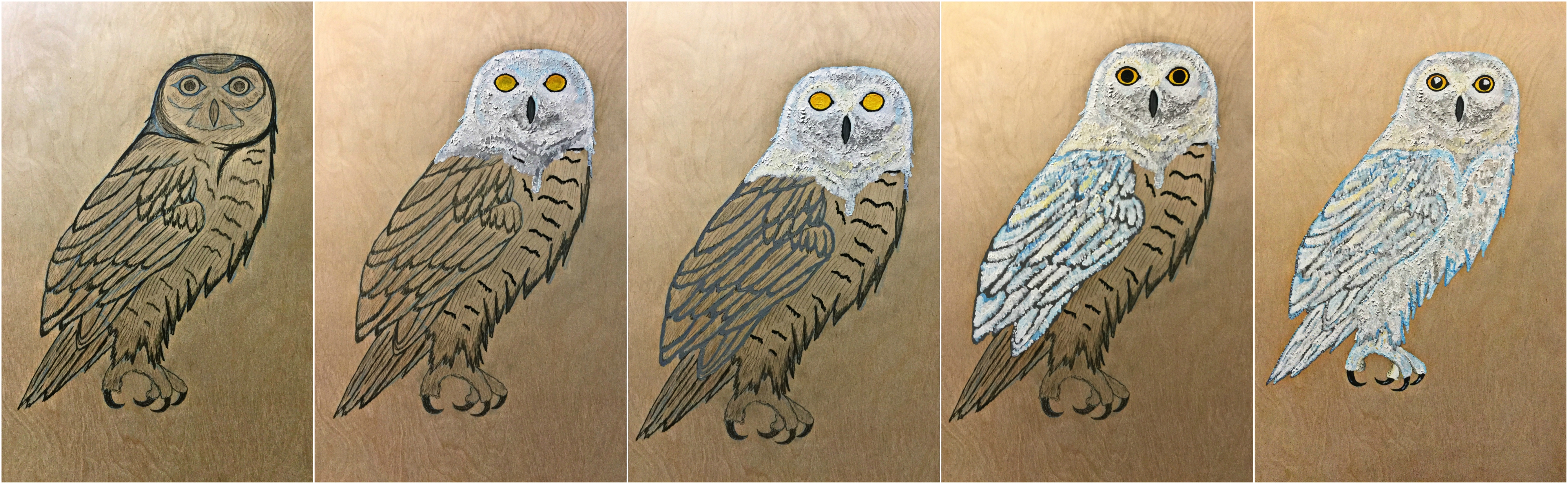
snowy-all
This owl has been on my to-do list for years. It wasn’t until this fall that I felt I had the technical skills to get it done like the others. I used yellows and blues to add some dynamic. This is likely my last owl that I’ll get done here in Oakland. My next few projects will be African raptors, and those will be coming to you from Chicago, Illinois.
I am forever grateful for the time I’ve been able to spend in Oakland, I underestimated its potential, but learned quickly of its heart, passion, and beauty.
I’m excited for the art and adventures to come in the city by the lake.
A heartfelt thank you to all my California friends who have encouraged me to reach this point, both as an artist and as a man.
Thanks for looking at birds with me again. Lots more to come.

Thank you,

Farnco

On a branch in the back of my mind.

I walked to California in concrete shoes,
Midwest boy with the nothing-certain blues.
 
She walked right past me with a halo made of lead,
I turned to look when I should have tied my shoes and fled,
 
She looked like spring and I looked like a thousand winters.
whenever I got near her my thoughts turned to splinters.


I’m not often sure who “she” is, but that’s an owl, I can tell you that much for certain.  


Drawing snowy white birds in a California rain storm.

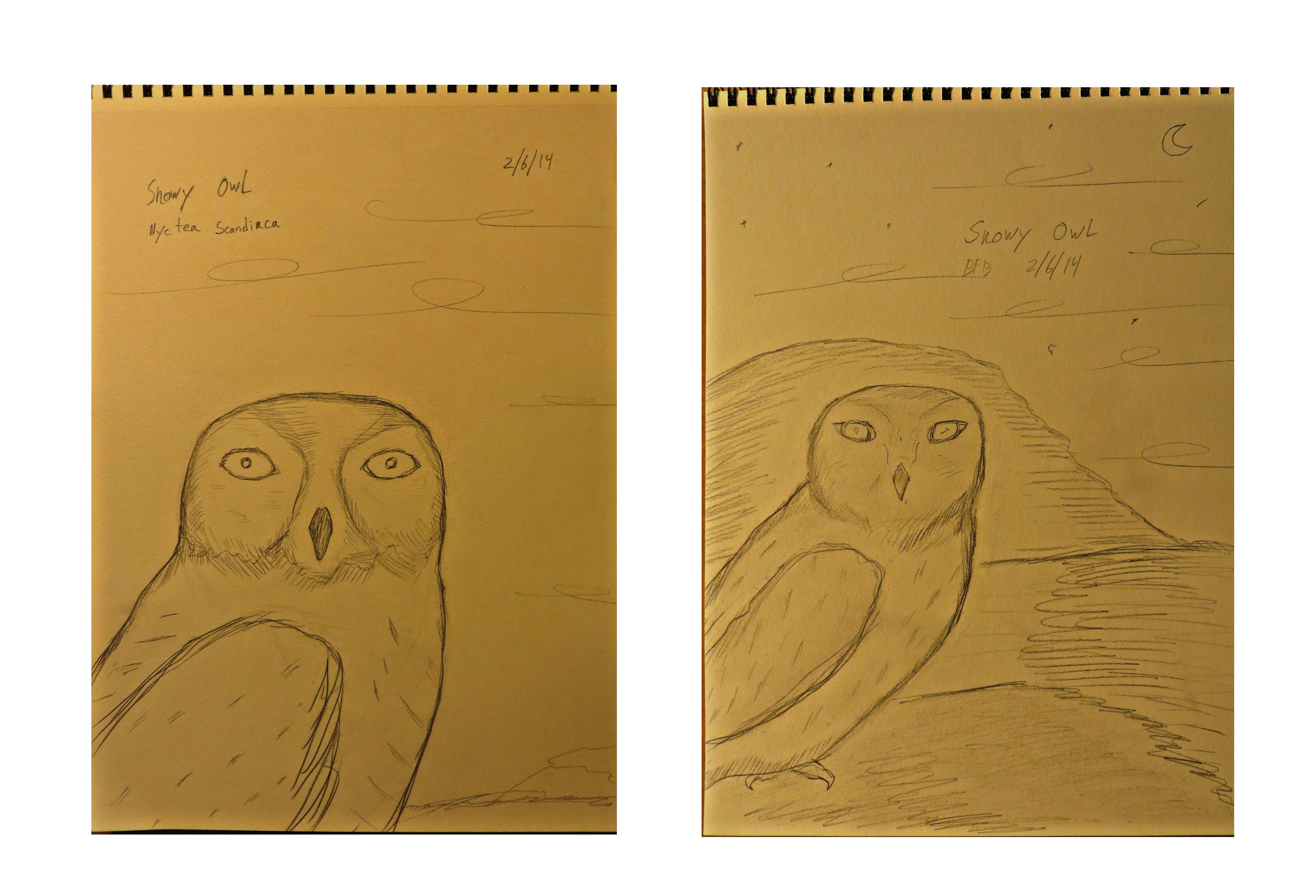
Rain finally bouncing off the leaves on the tree outside my window. We’ve had a dry winterless winter in much of California. I can hear the grasses on the hills around growing and smiling. Hopefully its enough to keep the whole joint from burning up in wildfire come summer. Rain falls outside, I draw pictures inside. With a gallon of orange juice and a new pen in hand.Snowy Owl sketches in a book of paper.

 
Snowy Owl sketches in a book of paper.


Owls are a favorite subject of mine to observe, sketch, and marvel at. The Snowy Owl is one I have not seen personally. Seems we just don’t share the same territory. I didn’t spend much time in the U.P. in the winter time, which is probably the only place we’d have met.

Snowy owl small watercolor illustration study.

Snowy owl small watercolor illustration study.


If one spends lot of time studying something you can pick up on its habits I reckon. Seeing as another Saturday night finds me again writing about, sketching, and coloring drawings of owls. While many of my peers are out at bars, clubs, and the like, I’m on my own perch hunting for the right color and series of lines to track down my wintery bird.

And that’s all right by me.