Falcons of the World: Peregrine Falcon

Falco peregrinus. 

The first Peregrine I saw was with my dad when he visited me in Morro Bay, Ca. at “the rock”.  It was perched way up there and we checked it out via binoculars. The next peregrine I saw was while standing in the middle of a busy intersection in Oakland, Ca. Somebody yelled “Get outa the street asshole!” And all I could do was point at the cloud of pigeon feathers created by a falcon hitting prey at 200+ mph. Then a couple weeks later while at work at Facebook HQ in Menlo Park, Ca. while drinking a beer with my coworker Brian (we were off the clock) one flew by and I lost my mind with excitement. It was like seeing a celebrity. 

In late 2016 I planned to move back to Illinois. It became clear to me I needed to be closer to my family and those that I loved. A concern I had was that I’d see fewer of the birds I’d fallen so hard for and dedicated so much of my time to illustrate and learn about. 

After four days on the road driving across half of North America and counting every hawk I saw (27) I pulled into my parents driveway. My dad (whom had driven all the way to California to help me move home) and I hugged in the drive way in celebration. This was the same place where we stood when I left for California almost 10 years prior. It was dusk and I walked out into the field next to the house and heard clearly the distinct call of a great horned owl. I knew then I was home and my raptor adventures had only just begun. 

Leaving California was a big change in many ways. But then there I was this February in Chicago, the city by the lake, watching two peregrines hunting shorebirds.  It was like watching cheetahs on the discovery channel hunt gazelle. 

I’d been wanting to revisit this painting and pose for a while and finally got back to it on a wood panel my Dad made for me. Here we are almost exactly 5 years since I first put it on page (wooden page) in Oakland.

We’re back again coming in to land on an outstretched hand. 

I’m so grateful for my family for all they have done to push me to learn, love, and grow. I’m also grateful for you for looking at birds with me. Thank you so much. 
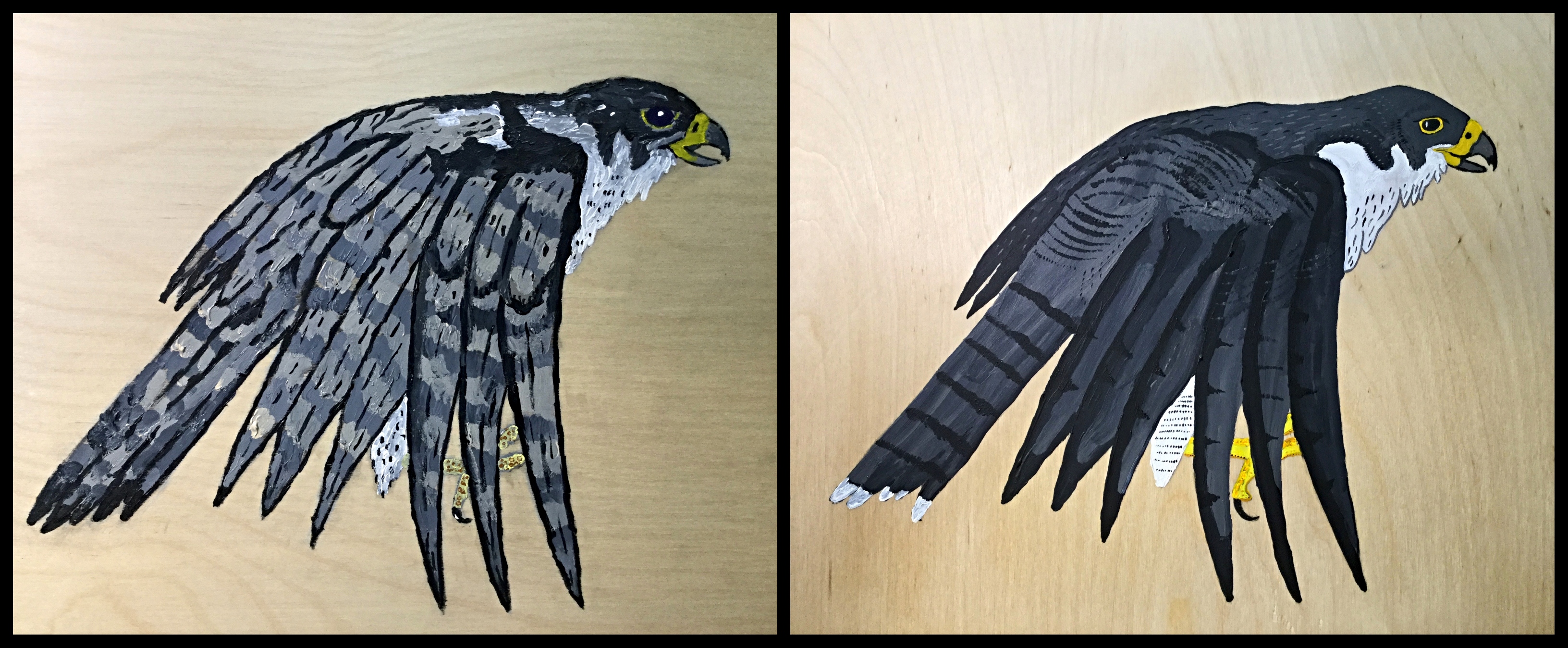
This one’s for you Dad!

Falcons of the World: Bat Falcon

Falco rufigularis

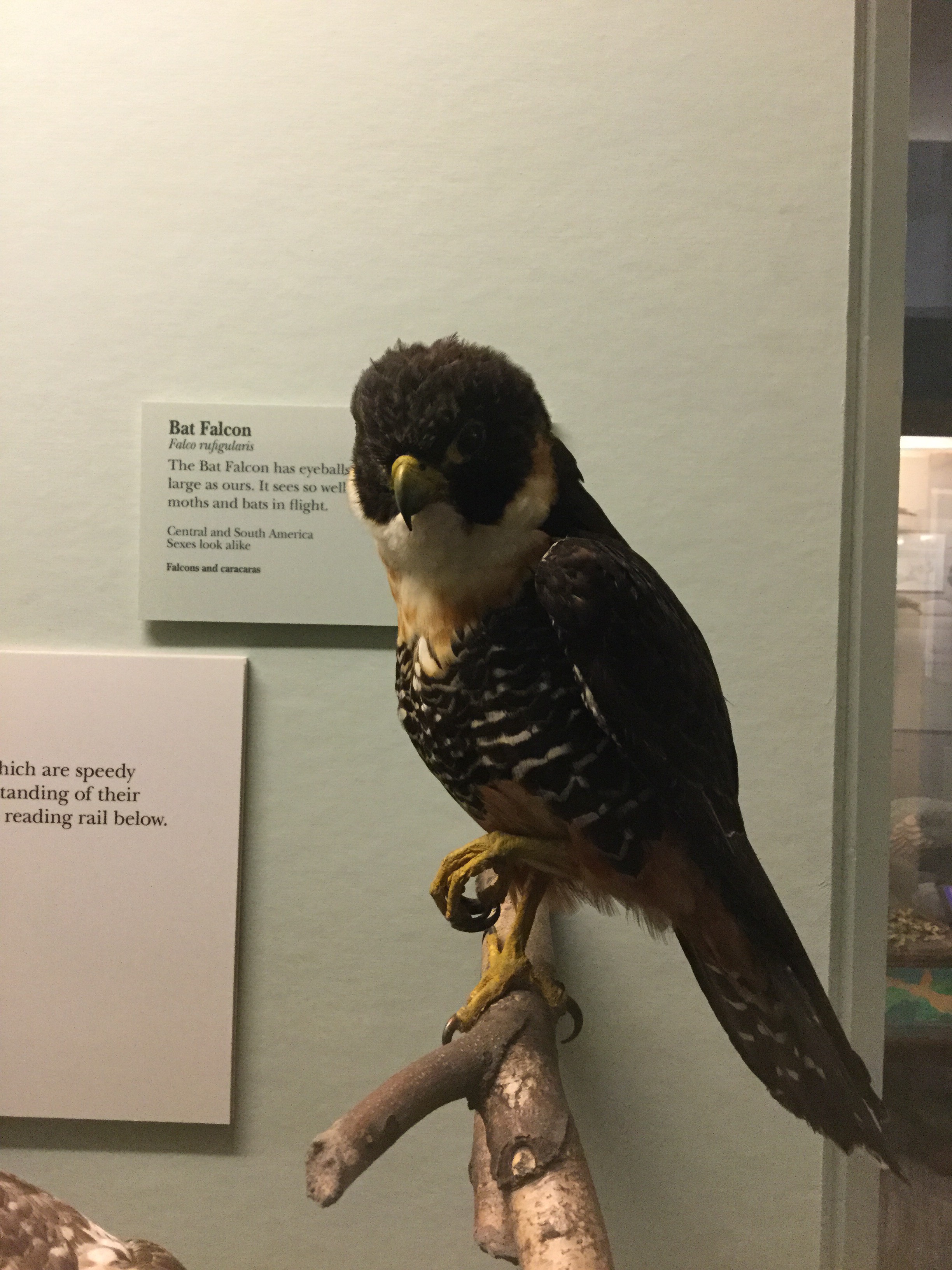
Here’s a small falcon species found in tropical forest regions of southern Mexico and south as far as Argentina. Rufigularis feeds primarily on bats (yeah right?), birds, insects, and small mammals. 

I have already painted one of these for you. A wonderful specimen sits in the Field Museum of Natural History in Chicago. Just a few miles south of my drawing desk. I’ve photographed it countless times to aid in paintings like this. 

IMG_9812

I send you my best. 

Thanks so much for looking at birds with me. 

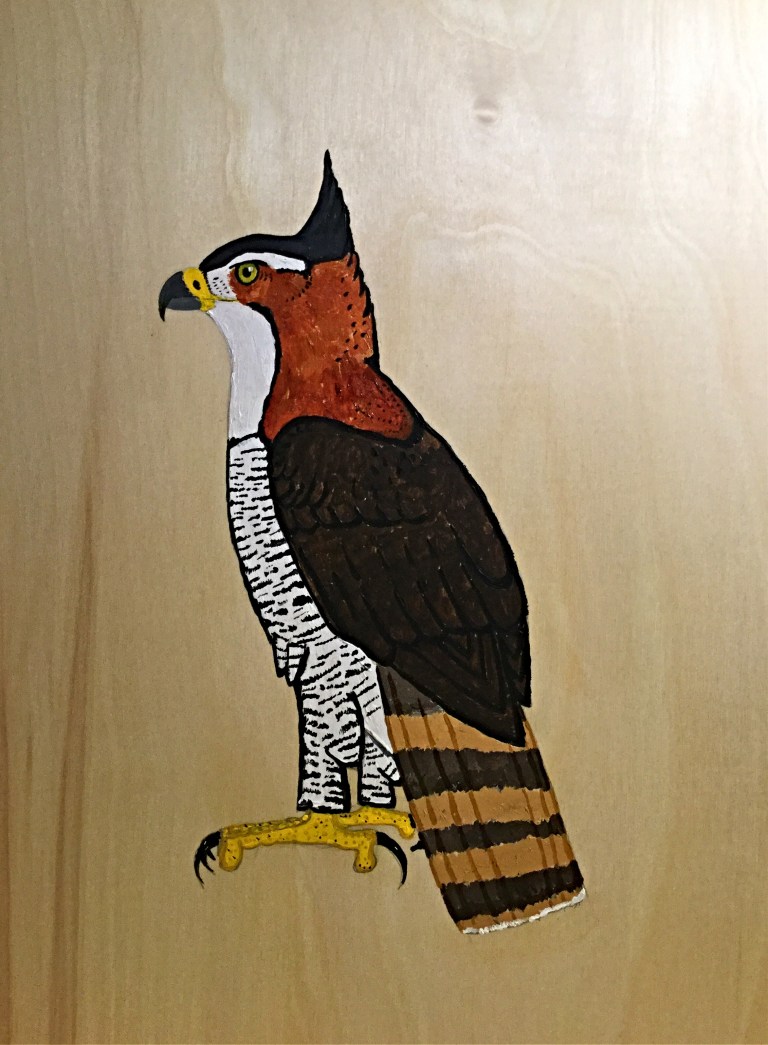
Raptors of the World: Ornate Hawk-Eagle

Spizaetus ornatus

A medium size eagle found in tropical forests of Central and South America.  Aptly named for its unique coloration and head crest of black feathers.

Prefers to hunt from a perch or high glide in thick tropical forests. The dinner menu for Spizaetus ornatus is a variety of small mammals, birds, and reptiles.

ornate haekeagle processB2

My favorite raptor of South America (There’s some solid competition there too).  I’ve made a few paintings of this one before but until now I feel I hadn’t captured its nuances. Then again having never been on the same continent as one, it’s hard to say. Thank you so much for looking at birds with me.

Hawks of the World: Red-tailed Hawk

Buteo jamaicensis.

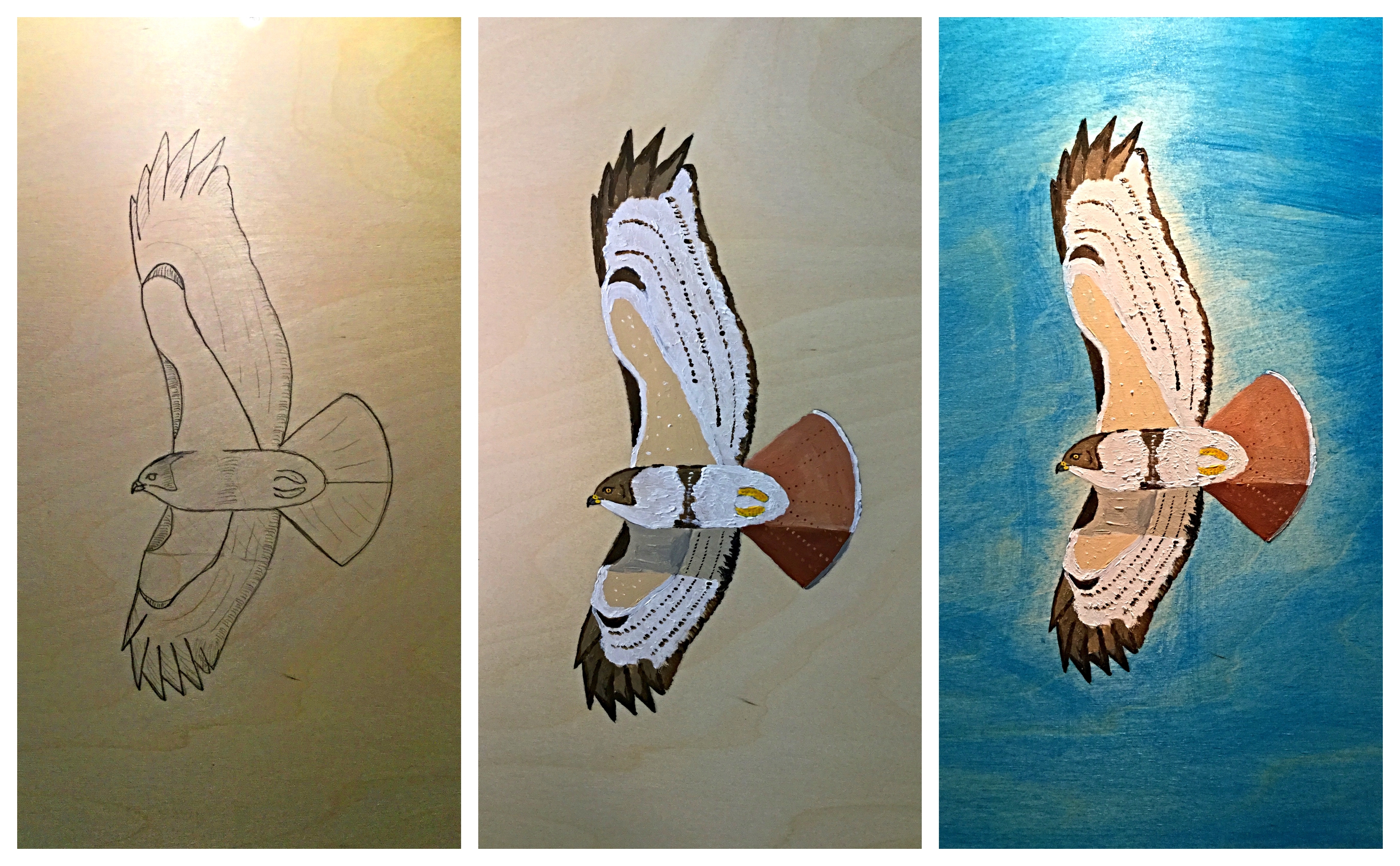
North America’s most widespread raptor. Found in open regions of Mexico all the way north to Alaska and just about every point between. They prefer grasslands, fields, deserts, roadsides, parks, farmland, and broken forests. They feed primarily on small mammals, birds, reptiles, and swarming insects. They hunt from a perch like utility poles and trees. They also hunt on the wing, soaring in circles, gliding on thermals.  These hawks mate for life, nesting in treetops, cliff sides, and man made structures. They lay a clutch of between 1 and 5 eggs. Incubation time varies from 28-35 days.

rtha flight panel process

rtha panel paired 999

It’s no secret this is my favorite bird to study. In the field or in the studio they never fail to capture my imagination. They embody a sense of exploration and beauty to me. They were a common sight in my 20s when I was exploring California by bicycle and have remained a common sight as I enjoy my home near the prairie remnants of Illinois.

I put together these two paintings over the last couple weeks on panels my father made for me in his workshop. I can’t begin to express what a great gift it is to be able to paint on a panel he made, and to have his generous support all my life.

I’m so glad I get to share these birds and art with you all, thank you so much for looking at birds with me.

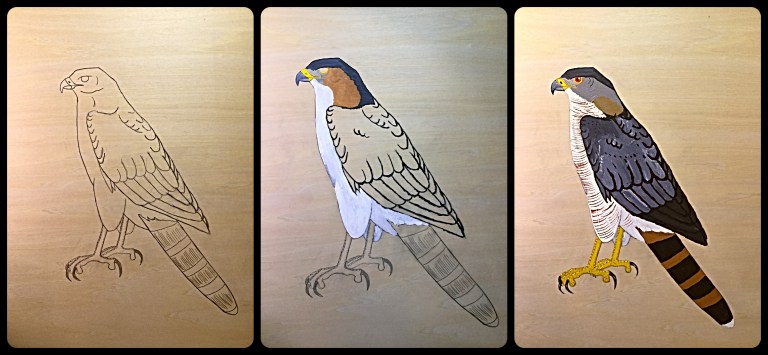
Hawks of the World: Sharp-shinned Hawk

Accipiter striatus.

The Sharp-shinned hawk is North America’s smallest Accipiter hawk. Found in a variety of habitats across North America. Shins feed primarily on birds, rodents, and swarming insects.

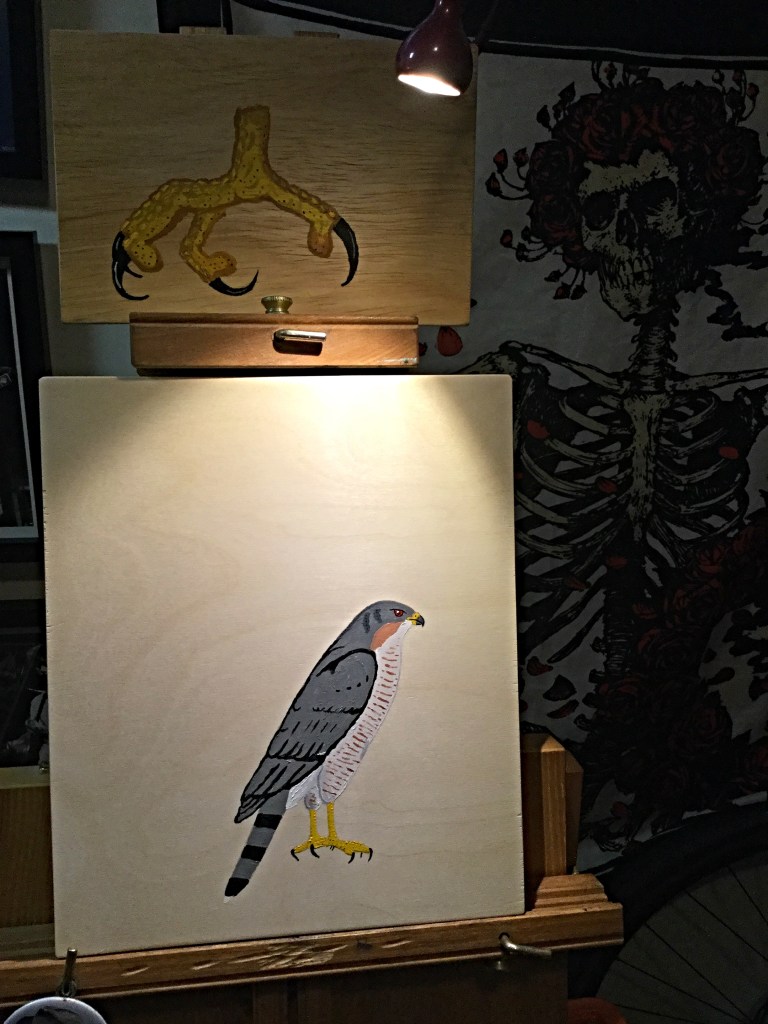
Until this week this is a hawk that hasn’t been very well represented in my collection of panel paintings. I enjoyed making the first panel so much I made a second one the next day.

Raptors of the World: Ornate Hawk-Eagle

Spizaetus ornatus

Here’s an aptly named raptor found in the tropical forests of Central and South America. Feeds primarily on mammals, birds, large lizards, and snakes. They often hunt still from a perch then dive down after prey that’s passing by. They are also very strong flyers that can chase down prey that’s escaping.

ornate process2

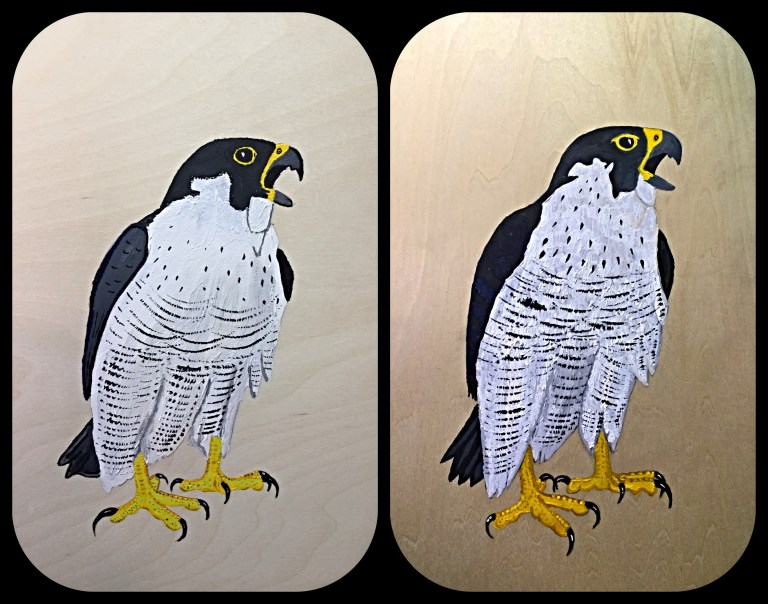
Falcons of the World: Peregrine Falcon (Again indeed)

Falco peregrinus.

I first learned about these fine birds from a book when I was in second grade. Every time my class visited the library I went straight to the wildlife section and dove in. Fast forward some 20 some years and I’m still fascinated by these fine falcons.

I’m grateful to have had many different experiences with them in the wild. From California to Illinois in a number of different habitats. There’s really nothing quite like watching them fly, hunt, dive, and dine.

Falco t-shirt process edit

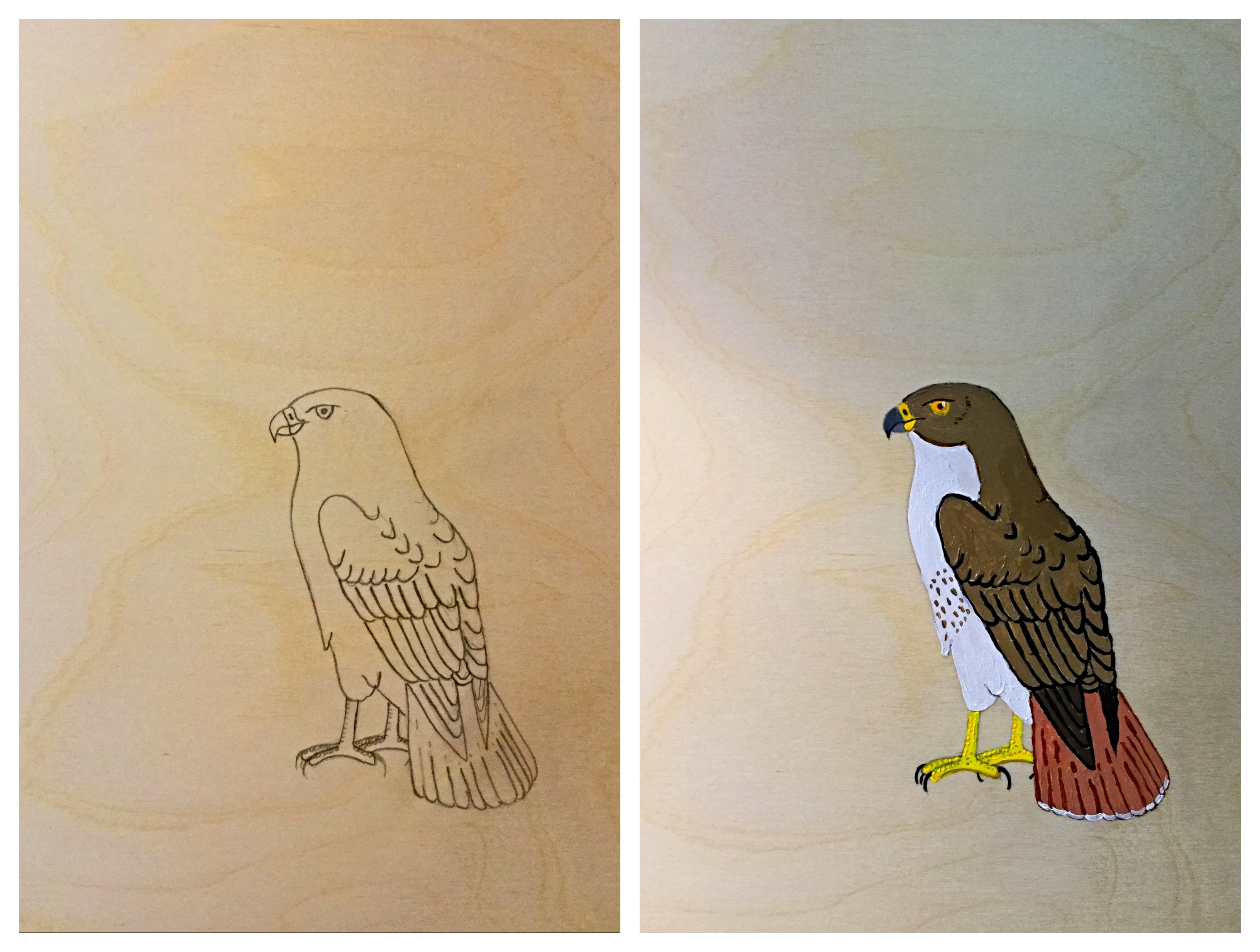
I’ve made a few different Peregrine panels over the last five years. This pose is among my favorites and so I duplicated it. I’m proud to be working on panels my father made for me in his wood shop.

Thanks Dad, and thanks to you for looking at birds with me.

Hawks of the World: Cooper’s Hawk

Accipiter cooperii.

Cooper’s hawks are definitely high in the ranks of my favorite birds to watch, draw, and paint. Always a difficult bird to id from it’s cousin the Sharp shinned hawk (Accipiter striatus). I’ve shared other paintings here of this fighter jet-like song bird hunter. This is the first painting I’ve shared of one I’ve put together on a panel my amazing wood-working father had assembled. When I started these panel paintings years back, I was living in Oakland, Ca. I bought my panels from an art supply store. I imagined how cool it’d be to be able to live close to home and paint on panels my dad made. Or at least commandeer his wood shop to make my own panels.  Fast forward some five years and here we are. My dad turns out 10 panels a week for me. I’m sitting on an amazing back-stock of high quality panels and all I have to do is decide which bird to paint.

So I went to the Cooper’s Hawk. One of the first I saw upon my return to my home town four years ago and one I’ve seen plenty of since. In fact one I enjoy so much upon finishing this last one, I started fresh again with another. A feat only easily accomplished by having the wonderfully supportive friends and family I have, and a fine stock of papa-made wood panels.

So I thank you for looking at hawks with me, and my father for providing me with the supplies I need to keep my heart soaring through the branches after birds like the Cooper’s Hawk does.


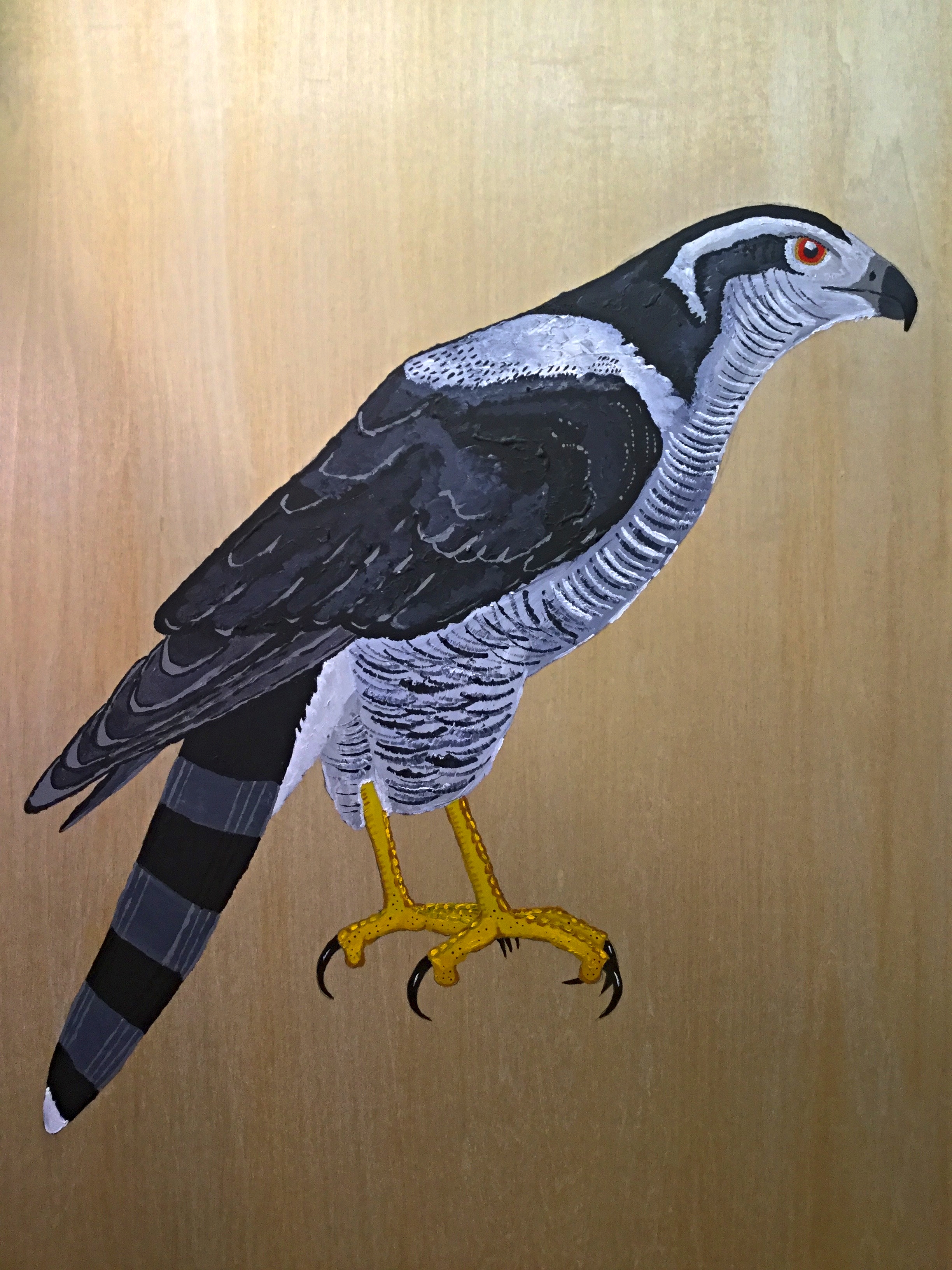
Hawks of the World: Northern Goshawk

Accipiter gentilis.

Again.

We’ve looked at this bird together before, and I’m grateful for another opportunity to share it with y’all again. North America’s largest species of Accipiter hawk. Found in forested areas of North America, Europe, Asia, and even northernmost Africa. They feed on a wider variety of prey animals than other Accipiter hawks. Birds, small mammals, insects, amphibians, and reptiles make up the menu.

This was a fun one to paint. I took my time with it over three weeks. Having made a few portraits of this species in recent months I felt it was past time for a full scale illustration of the bird in acrylic paint on a birch panel. So here we are.

Thanks so much for looking at birds with me again.

Northern Goshawk Panel

Hawks

Hawks have been a focus of mine since the beginning of this decade that’s now closing down. Catching a glimpse of a red tailed hawk coasting on the thermals while I rode my bike in the hills of California. That’s where my interest was first peaked. I feel I’ve lived a lifetime since then. Though that same situation still occurs while I’m exploring the shores of Lake Michigan or the very same prairies I did long before my love affair with painting hawks began.

It became important to me to learn how to paint those birds and all the countless others that I’ve crossed paths with. While this decade is coming to a close my journey as an artist is just beginning. I’m proud to share another hawk painting with you.

With this blog as I developed it, I made a point to steer away from the poetic and just share the science and while I still intend to share more species and information with you. Forgive me while I take but a moment to reflect on the miles and years we’ve all come to get to today.

hak process

This one is for our friends who can’t be here with us tonight. Thank you so much for looking at birds with me.