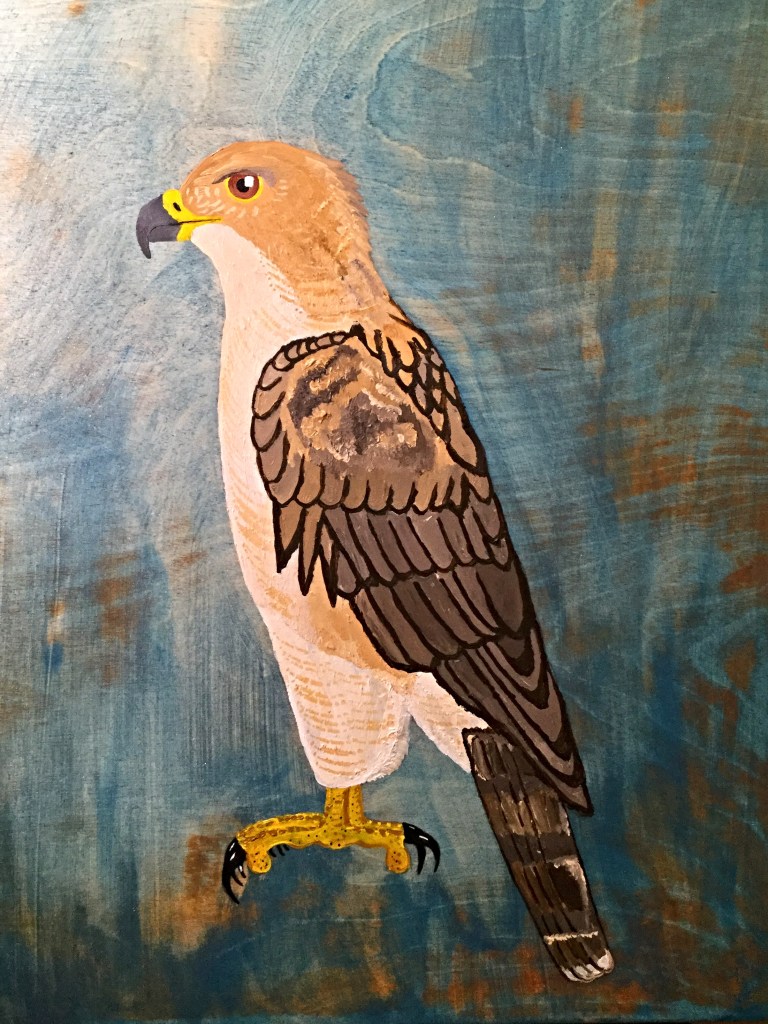
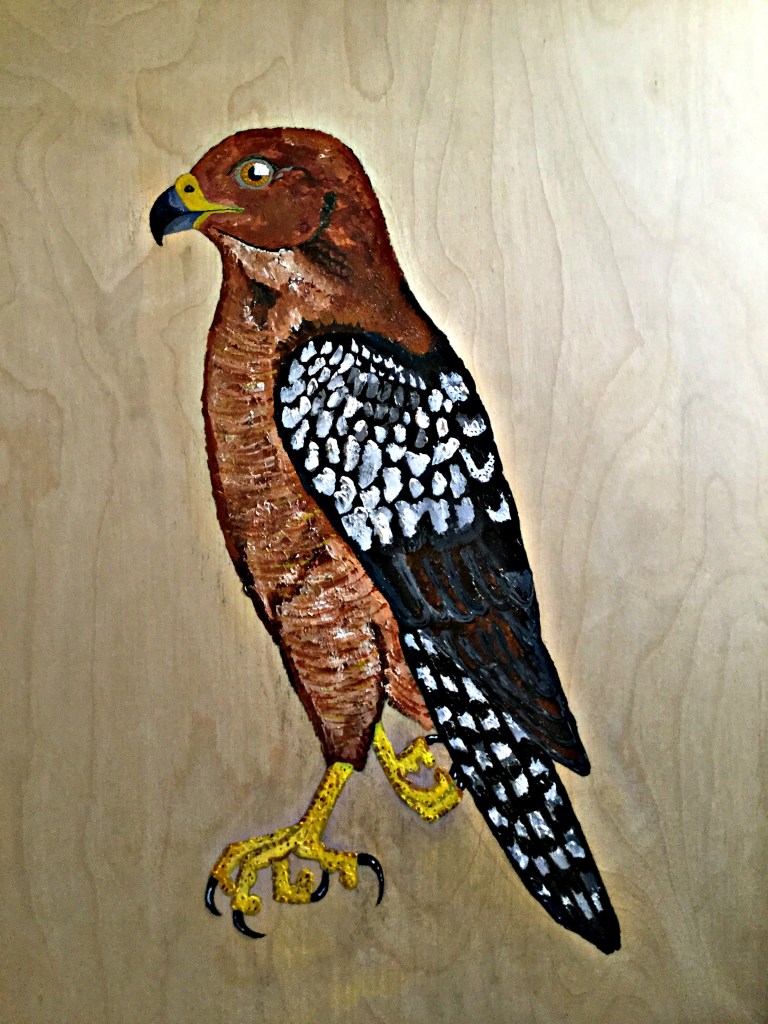
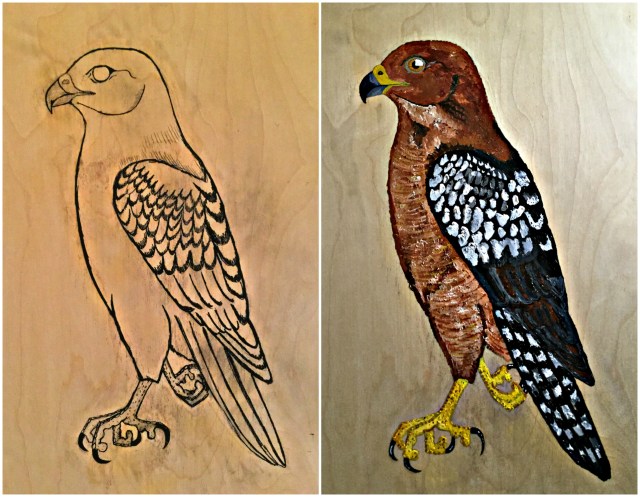
Raptors of the World: Red-tailed Hawk (juvenile)

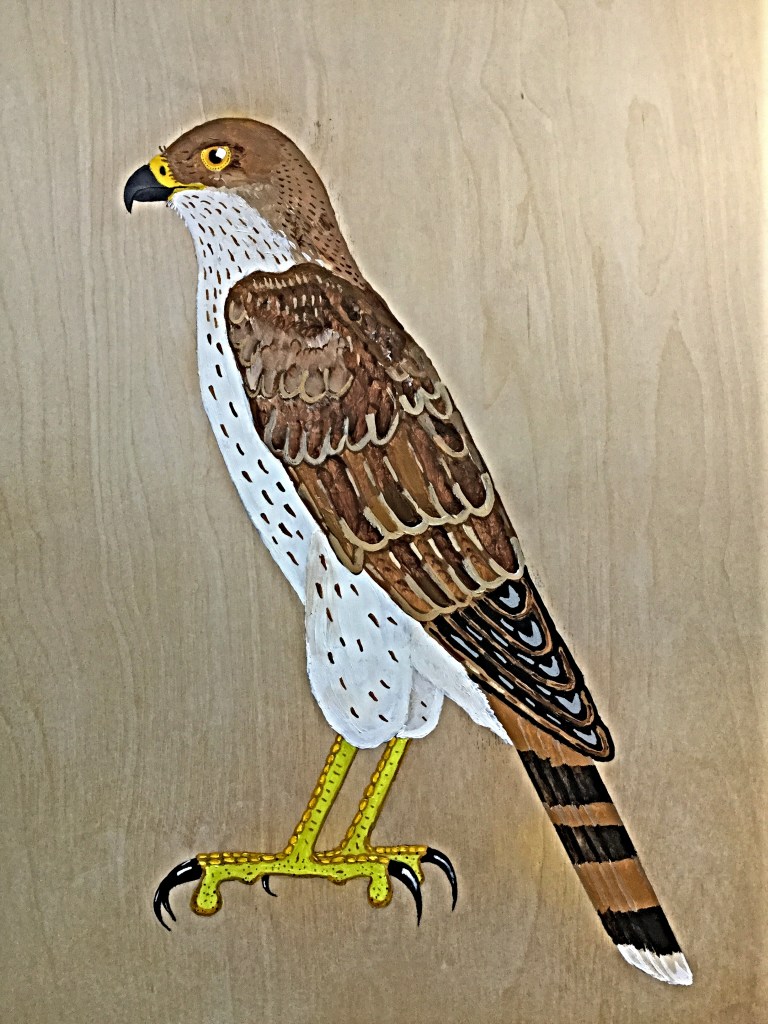
I’ve painted plenty of adult Red-tailed Hawks and wanted to do a panel painting of a first year hawk. Even more specifically a light morph. Red-tailed hawks don’t gain their namesake red tail feathers until their second and even sometimes third year.

This was painted on a panel that’s been used for a few different paintings and has been sanded down many times and washed with several different background colors. That’s what gave it the unique coloring you see here.

I’ve probably painted more of these birds than any other. They hold a special place in my heart. Thank you so much for looking at birds with me.

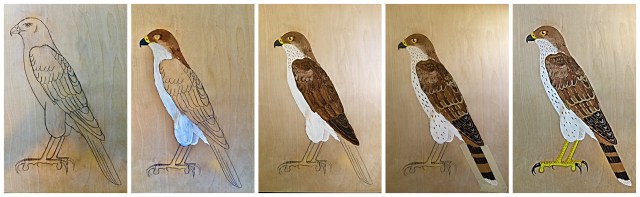
rtha lite process

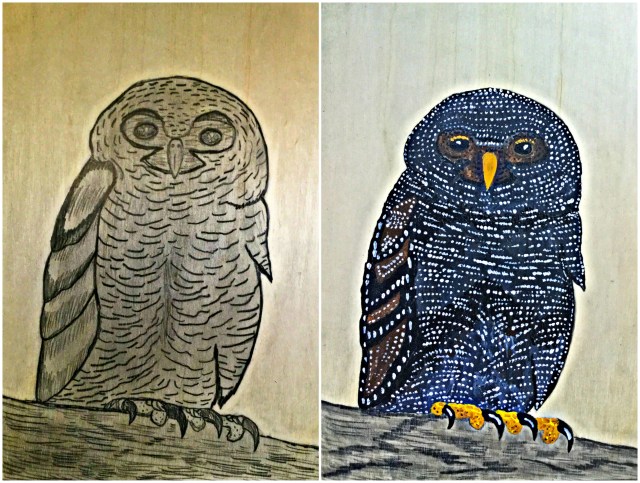
Owls of the World: Barn Owl (again)

Tyto alba. 

One of the most wide spread species of owl on the planet. They are found on all continents except Antarctica. These owls occupy open and lightly forested regions as well as agriculture and urban areas. 

Barn owls feed primarily on small mammals such as mice, rats, and voles. Most of which are hunted from a perch. Bats occasionally make the menu as well, taken in flight. A barn owl family with nestlings can consume as many as 10,000 rodents per year. This makes them a friend to corn and grain farmers everywhere. 

barn owl process

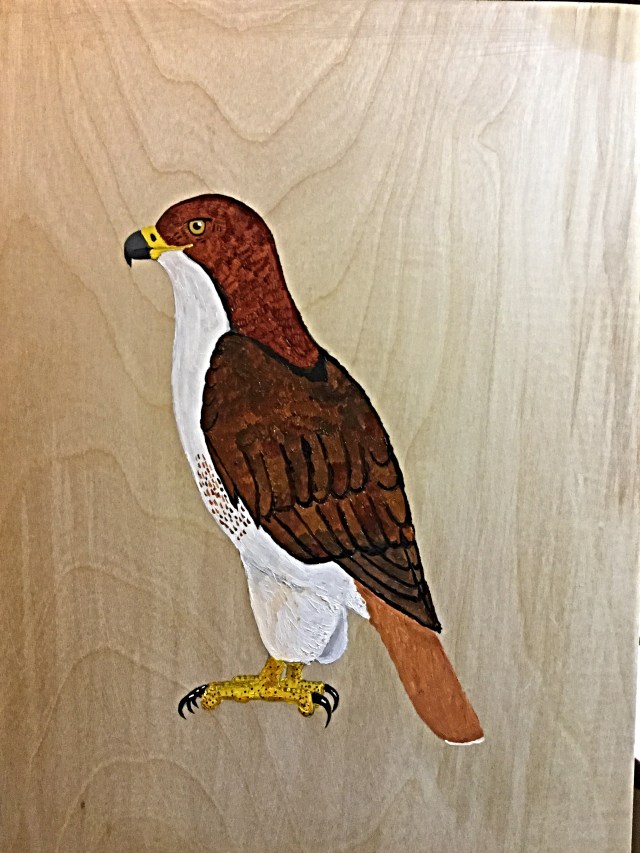
Hawks of the World: Red-Tailed Hawk

Buteo jamaicensis

Found in a variety of color morphs across much of North America. Occupying a variety of habitats, open savanna, grasslands, coniferous forest, deserts with cacti, farmlands, and urban areas. Feeds primarily on small mammals like mice, voles, squirrels, and chipmunks. Occasionally preys on reptiles, birds, and swarming insects. 

Absolutely one of my favorite birds to paint, photograph, and watch. Here’s a collection of a few of my recent paintings of North America’s lion of the sky as well as a few photographs from the field. 

february rtha processfebruary rtha

april rtha processapril rtha

may rtha processmay rtha

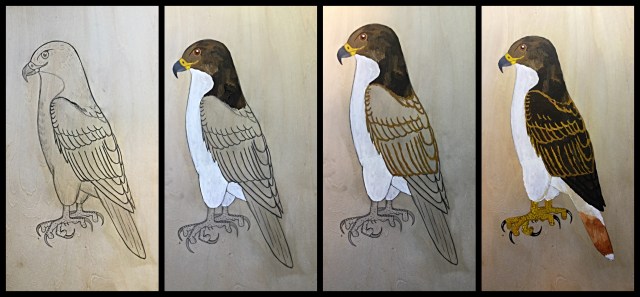
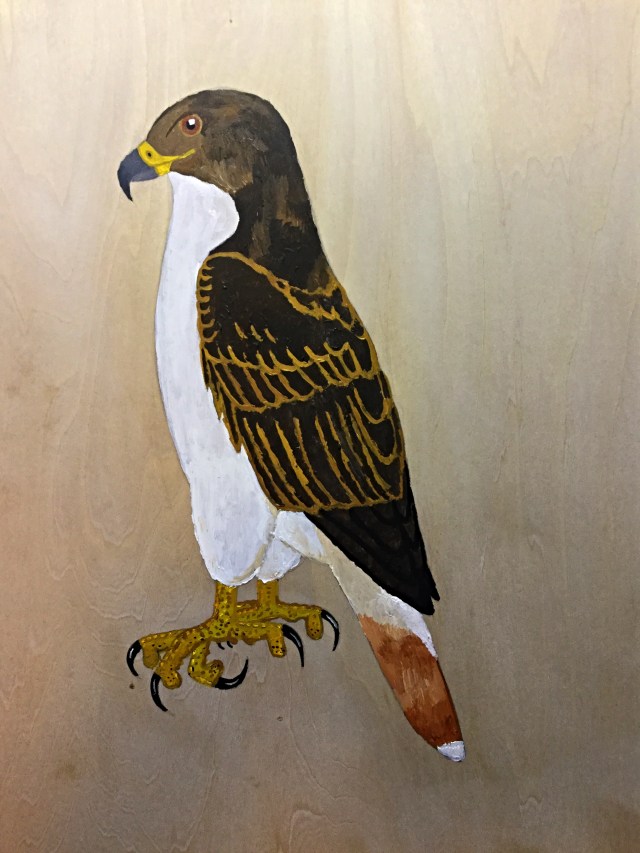
Hawks of the World: Japanese Sparrow-Hawk

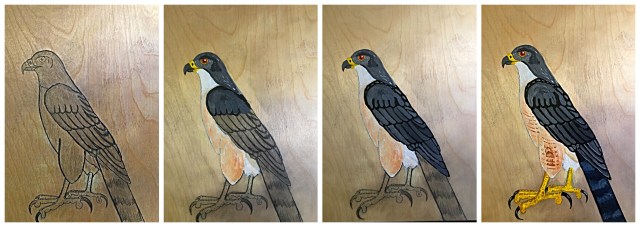
Accipiter gularis, or Japanese Sparrow-hawk is a medium size accipiter. Like many Accipiters, females of this species are larger than males.  These fast flying hunters can be found in coniferous and deciduous forests of Eastern Asia. Breeding in China, Japan, Korea, and Siberia. Winters in Indonesia and Philippines.

Accipiter gularis feeds on birds as large as magpie, also takes bats, rodents, and reptiles. Nests are made close to tree trunks and made of sticks and leaves. Laying 2-5 eggs per clutch.

accipiter gularis process

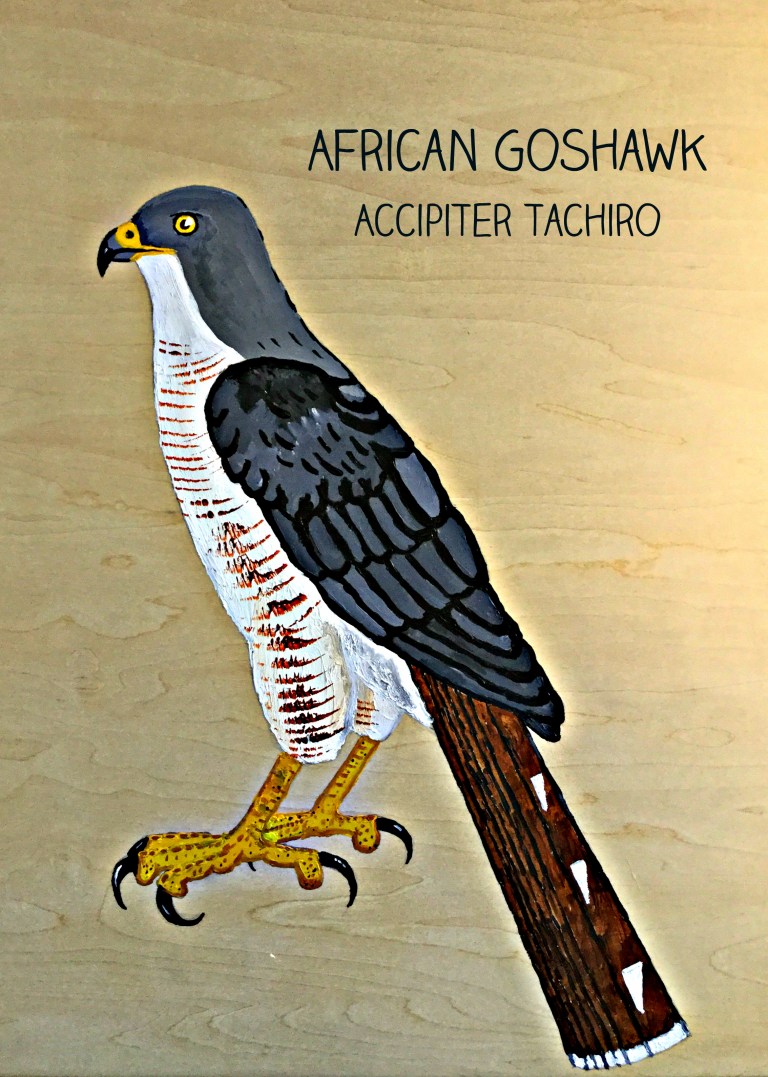
Hawks of the World: African Goshawk

African Goshawk

Accipiter tachiro

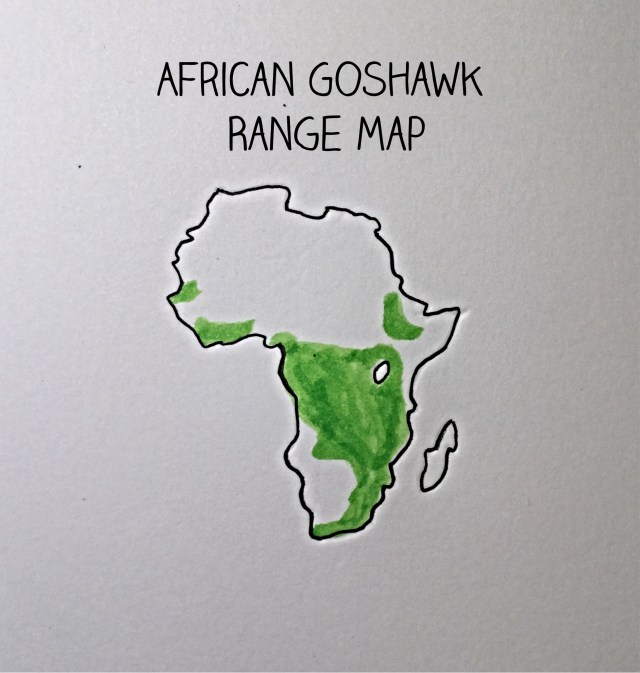
This medium sized accipiter can be found gliding over its densely forested habitat. They primarily still hunt for their variety of prey that includes: reptiles, insects, mice, birds, and bats.

They nest in dense foliage building nests of sticks but also known for taking over nests of other birds.

range map

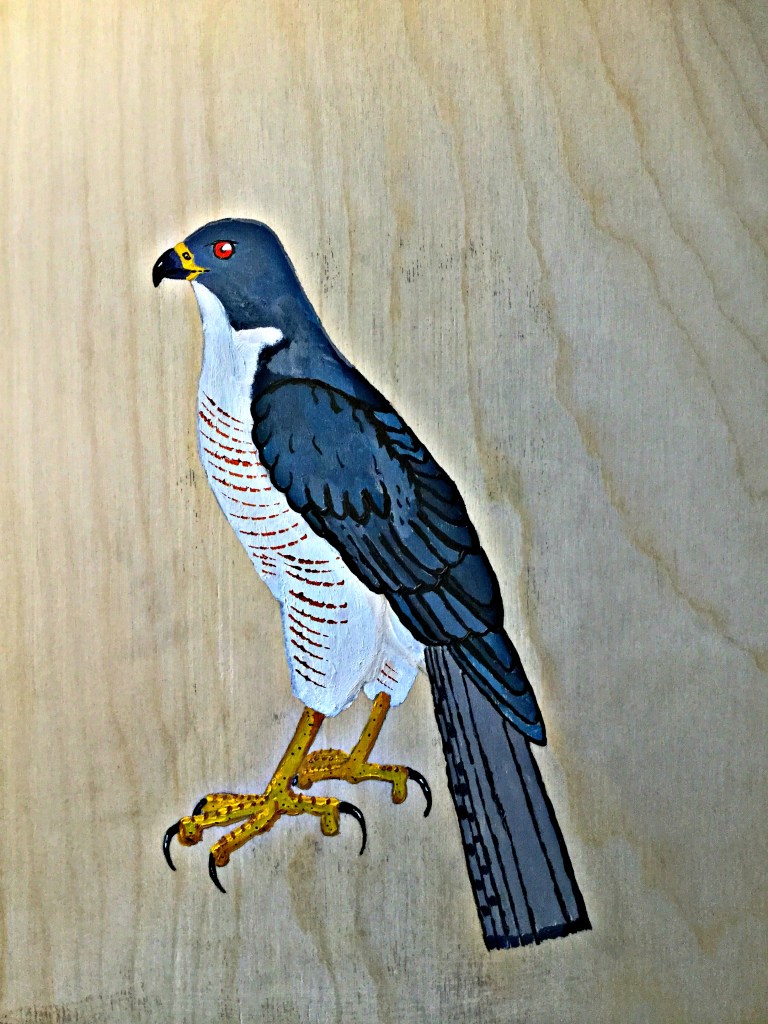
paired with NOTEXT

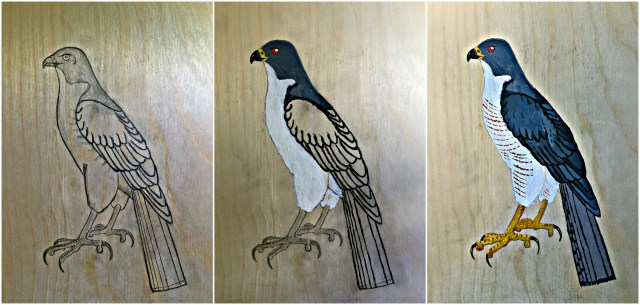
This was a fun 11×14 panel to work on. I’m currently working on a larger 18×24 panel of a large South American raptor. Thanks for looking at birds with me.

Hawks of the World: Shikra

Accipiter badius.

The Shikra or Small-Banded Goshawk. Can be found perched in the open where it still-hunts for bats, small birds, reptiles, and insects. It being a smaller accipiter larger birds and mammals are off the menu. It usually takes prey on the ground or plucks it from tree trunks or foliage.

Preferring a wooded or partially wooded habitat, Shikra nest in trees and build a nest similar to that of crows, lined with grass. The average clutch size is 3-4 eggs.

Their range is quite extensive. Covering parts of Africa, India, and Southeast Asia.

accipiter range map

I really enjoy illustrating accipiters. This one was no exception. Thanks for looking at birds with me.

shikra process

Sources:

  • Kemp, A., Kemp, M. and Hayman, P. (1998). Sasol birds of prey of Africa and its islands. London: New Holland.
  • Ferguson-Lees, James, et al. Raptors of the World. Princeton University Press, 2005.

Hawks of the World: Red Shouldered Hawk

Buteo lineatus.

Definitely one of my favorite birds to watch and paint. Found across eastern North America and along the California coast south into Mexico. Hunting from a perch and on the wing. They take a variety of prey, ranging from small mammals, birds, insects, snakes and occasionally fish.  Found in forested and open areas. Nests are built of branches in treetops at 35-50 feet up. They lay usually 3 eggs per clutch.

red shouldered hawks

RSHA map

Thanks a bunch for looking at birds with me. We covered this bird already here something like three years ago and I felt it was time to have another go at painting this bird as I’ve learned a lot since the last time. I’m glad I did, this was very fun to put together.

Owls of the World: Black-banded Owl

Here’s a Black-banded Owl, Strix huhula.

These owls have an extensive range in northern and central South America. Preferring tropical and subtropical forests. Also found in banana and coffee plantations. They feed at night primarily on insects such as mantises, beetles, and locusts that it catches in flight. Little is known of breeding and nesting habits. They grow to be 12-14 inches tall with a wing span of 16 inches.

Black-banded pair

Owls of the World: Spotted Wood Owl.

Strix seloputo.

The Spotted Wood Owl is a medium sized owl. Averaging 18 inches tall. They are found across Southeast Asia. Its diet consists of rats, mice, small birds, and large insects. They roost by day, often close to the trunks of trees in dense foliage to avoid detection from other birds. They nest high up in trees, and lay up to three eggs at a time. They prefer nesting in partially clear forests and hunt in open areas. They can be found in populated areas, as well  as remote regions and areas not easily accessed like swamp forests and mangroves.
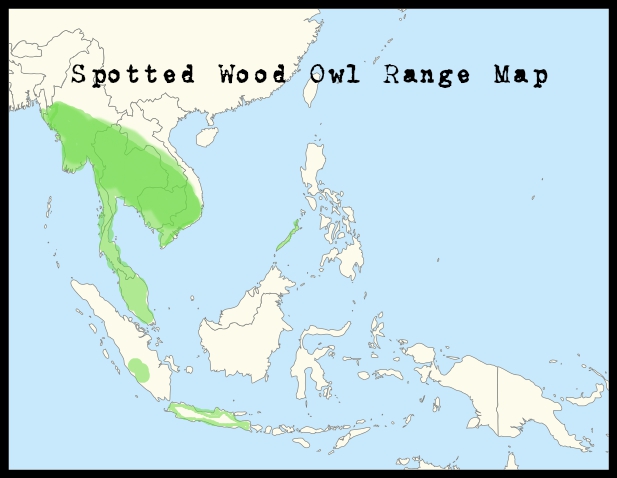
spo-woo-o-map
spotted-wood-owl-two
My plan was to hold off on painting more in this series until I was settled in Chicago. But I found this old panel while packing and cleaned it up and went for what could best be described as an encore. It was such a privilege to get to paint all these here in Oakland, and I’m very excited for the projects to come in Chicago. Another huge thank you to all my friends and family for all the support. My goal with all this is simple; Share the birds of the world with you all. Now my easel is packed and my brushes too. Stay tuned for a Bateleur Eagle, found in Zimbabwe, Africa. Coming to you from the city by the lake.

And once more for good measure, thank you for looking at birds with me.