Birds of Prey of the World (A Collection)

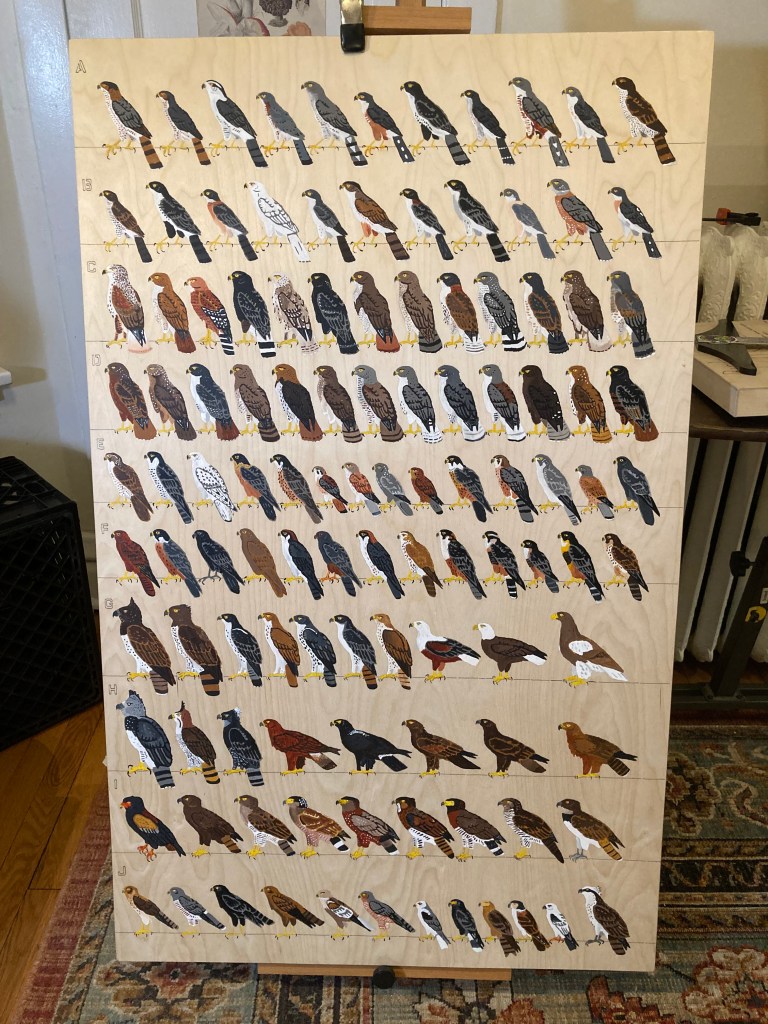
After the last few field-guide inspired panels, I got started on my largest undertaking yet in my 10+ years of exploring birds and painting. I have long wanted to take my love for field guide artwork and layout a large collection of species on one panel. 

My father hand crafted for me this massive (compared to my usual 16×20”) 30” x 40” panel. He handed it off to me in December of 2021 and I began selecting and doing the layout math. 

When selecting the species for this project I came up with a number of species from every continent that birds of prey are found on, that being all but Antarctica. 

It came out to 114 species of birds in all.  

22 hawks from the Accipiter Genus,

26 hawks from the Buteo genus,

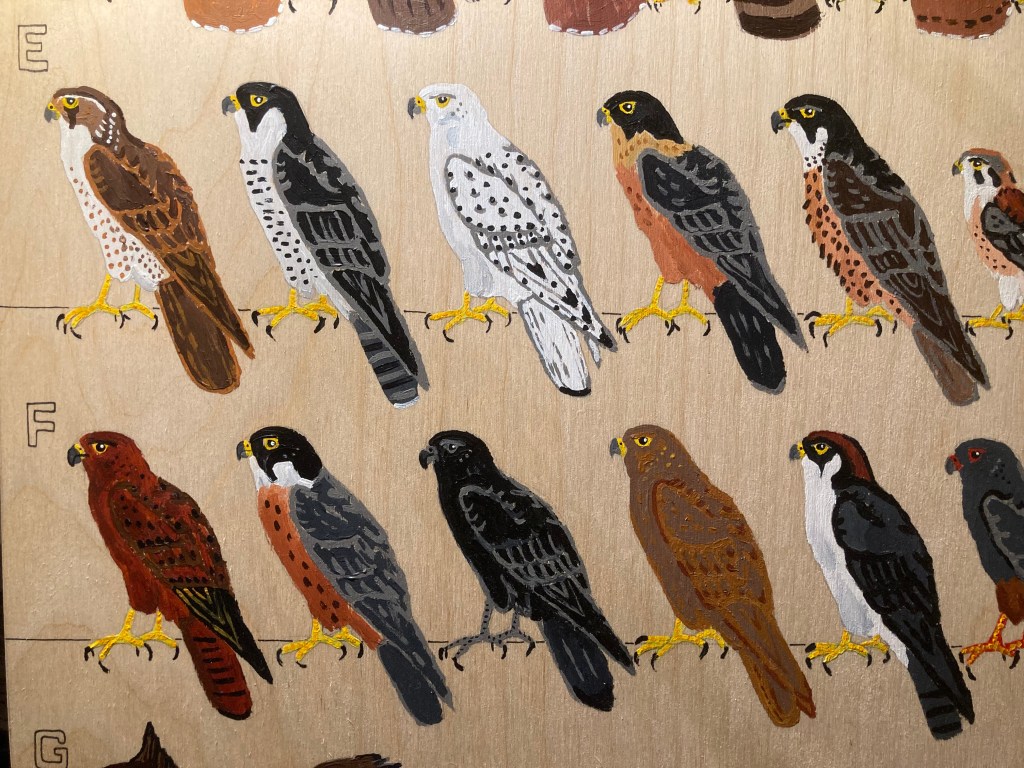
27 species of falcons,

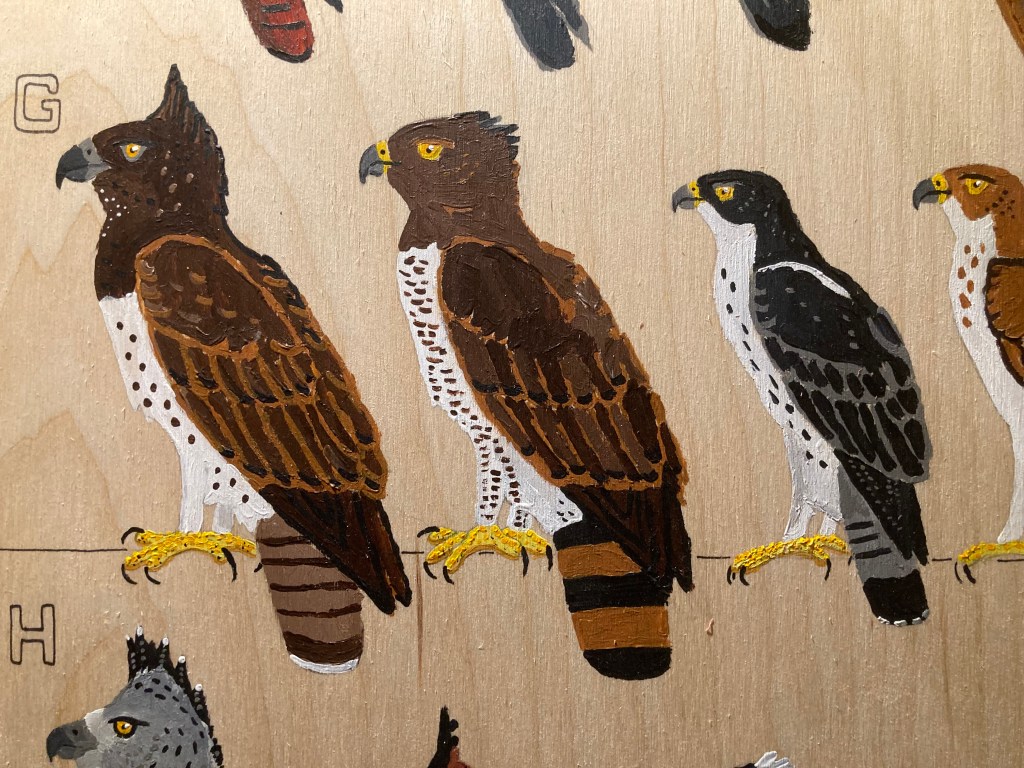
18 species of eagles,

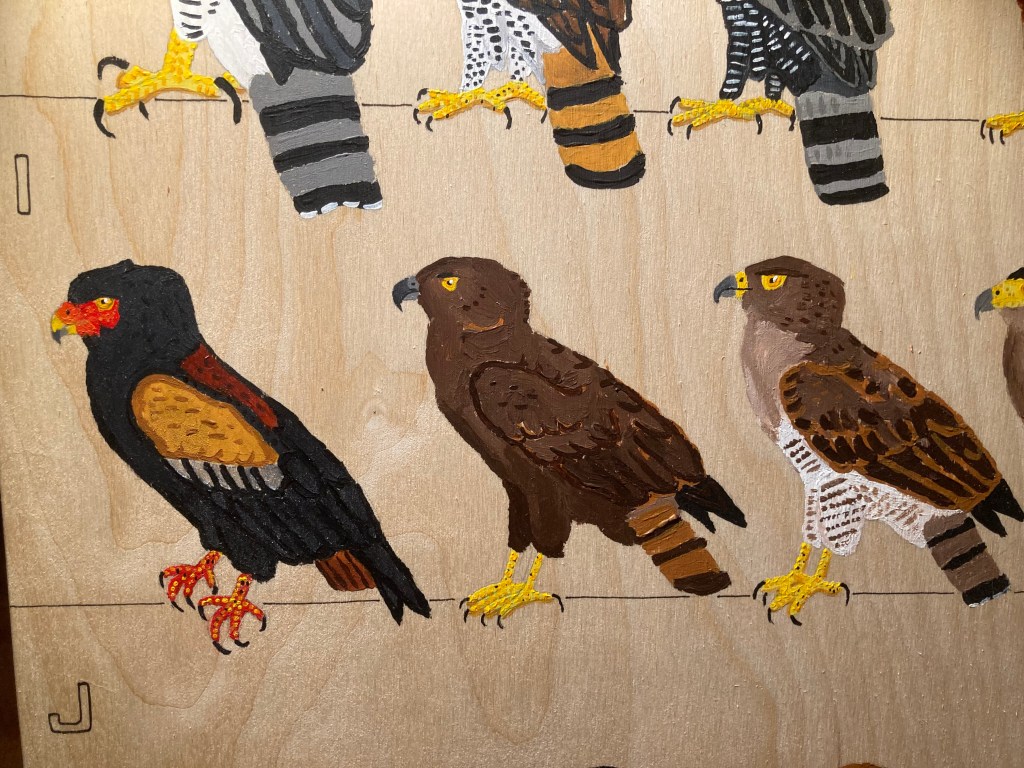
9 species of snake-eagles,

6 species of harriers,

5 species of Kites,

And one Osprey. 

I began the pencil work in the first week of February and painting began at the end of March. Then over the course of the following months with acrylic paint I brought to life on the panel all 114 species. 

To call the process a learning experience is an understatement. I poured through dozens of reference photos and books for each and every bird. Getting to know each one as best as I could. 

It’s not just the colors and look of the birds I was after but rather everything I can find on diet, habitats, and range. 

My biggest take away is how connected the world is through its birds. 

The Eleonora’s falcon you watched hunting birds on the shores of a beach in Madagascar today was hunting shore birds in Italy six months ago. (That’s a 4,715 mile flight). 

The Broad-wing hawk you saw in that Canadian forest last summer? It’s spending the winter in Argentina. (A cool 7,085 mile flight). So it stands to reason that habitat loss anywhere in between deeply affects all these birds and their prey animals. 

Aside from all the information I learned about the various species, it was an excellent lesson in patience and enjoying the process. Theres no good way to paint this many species in the detail I want and do it fast.  So I worked slowly and enjoyed the long haul of the undertaking each hour at a time and each feather at a time. 

The mediums I used on this project were pencil, pen, and acrylic paint. 
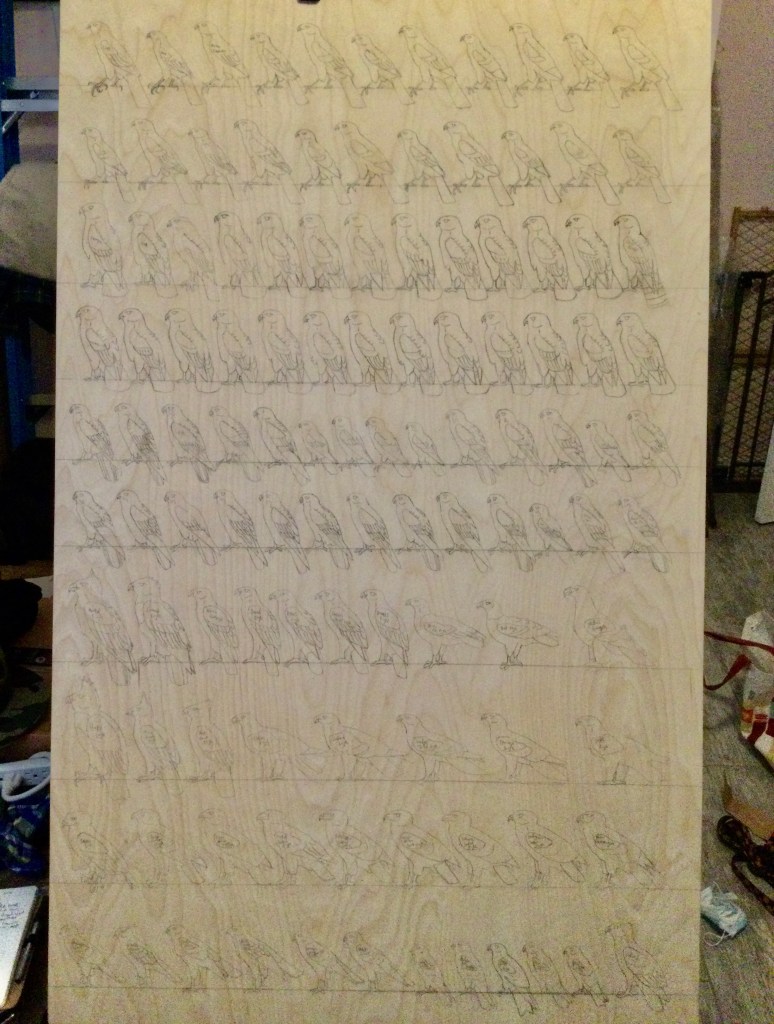
 

And the master “Who’s Who” list. from left to right:

A: 

Accipiter cooperii, Accipiter striatus, Accipiter gentilis, Accipiter badius, Accipiter ovampensis, Accipiter castanilius, Accipiter melanoleucus, Accipiter minullus, Accipiter tachiro, Accipiter francesiae, Accipiter henstii. 

B:

Accipiter madagascariensis, Accipiter melanochlamys, Accipiter erythrauchen, Accipiter novaehollandiae, Accipiter chionogaster, Accipiter chilensis, Accipiter albogularis, Accipiter poliogaster, Accipiter rufitorques, Accipiter fasciatus, Accipiter trinotatus.

C:

Buteo regalis, Buteo jamaicensis, Buteo lineatus, Parabuteo leucorrhous, Buteo hemilasius, Buteo albonotatus, Buteo ventralis, Buteo platypterus, Buteo albigula, Buteo nitidus, Buteo brachyurus, Buteo lagopus, Rupornis magnirostris.

D:

Buteo augur archeri, Buteo solitarius, Buteo augur, Buteo brachypterus, Buteo auguralis, Buteo swainsoni, Buteo ridgewayi, Buteo poecilochrous, Buteo exsul, Buteo polyosoma, Buteo galapagoensis, Buteo oreophilus, Buteo rufofuscus.

E:

Falco mexicanus, Falco peregrinus, Falco rusticolus, Falco cuvierii, Falco eleonorae, Falco sparverius, Falco cenchroides, Falco ardosiaceus, Falco moluccensis, Falco subbuteo, Falco columbarius, Falco hypoleucos, Falco tinnunculus, Falco concolor

F:

Falco alopex, Falco longipennis, Falco subniger, Falco berigora, Falco chicquera, Falco biarmicus, Falco jugger, Falco cherrug, Falco fasciinucha, Falco femoralis, Falco rufigularis,  Falco deiroleucus, Falco novaeseelandiae

G:

Polemaetus bellicosus, Aquila spilogaster, Hieraaetus pennatus, Hieraaetus ayresii, Aquila africana, Aquila fasciata, Haliaeetus vocifer, Haliaeetus leucocephalus, Haliaeetus pelagicus. 

H:

Harpia harpyja, Spizaetus ornatus, Spizaetus tyrannus, Aquila chrysaetos, Aquila verreauxii, Aquila audax, Aquila gurneyi, Aquila nipalensis.

I:

Terathopius ecaudatus, Circaetus cinerascens, Circaetus fasciolatus, Spilornis cheela, Spilornis holospilus, Dryotriorchis spectabilis, Spilornis rufipectus, Eutriorchis astur, Circaetus pectoralis. 

J:

Circus hudsonius, Circus cinereus, Circus maurus, Circus ranivorus, Circus aeruginosus, Circus assimilis, Elanus leucurus, Royrhamus socrabilis, Lophoictinia isura, Gampsonyx swainsonii, Ictina mississippiensis, Pandion haliaetus.

Thank you so much for looking at birds with me.

So many more to come. 

My two primary reference books were:

Weick, F., and L.H Brown. Birds of Prey of the World: A Coloured Guide to Identification of All the Diurnal Species Order Falconiformes. Paul Parey, 1980.

Ferguson-Lees, James, and David Christie. Raptors of the World. A & C Black Publishers Ltd, 2010.

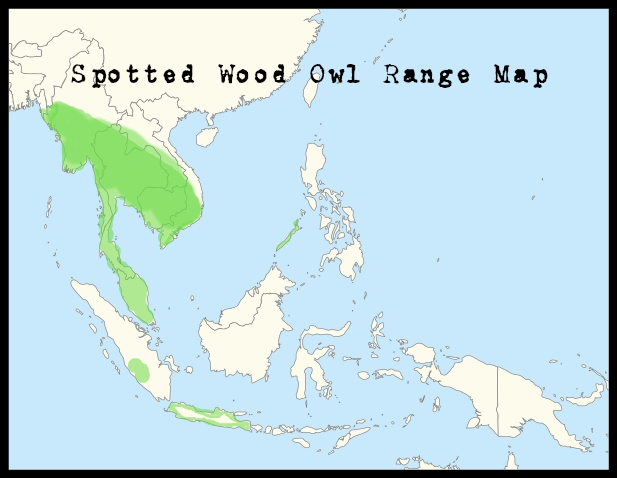
Owls of the World: Spotted Wood Owl.

Strix seloputo.

The Spotted Wood Owl is a medium sized owl. Averaging 18 inches tall. They are found across Southeast Asia. Its diet consists of rats, mice, small birds, and large insects. They roost by day, often close to the trunks of trees in dense foliage to avoid detection from other birds. They nest high up in trees, and lay up to three eggs at a time. They prefer nesting in partially clear forests and hunt in open areas. They can be found in populated areas, as well  as remote regions and areas not easily accessed like swamp forests and mangroves.

spo-woo-o-map
spotted-wood-owl-two
My plan was to hold off on painting more in this series until I was settled in Chicago. But I found this old panel while packing and cleaned it up and went for what could best be described as an encore. It was such a privilege to get to paint all these here in Oakland, and I’m very excited for the projects to come in Chicago. Another huge thank you to all my friends and family for all the support. My goal with all this is simple; Share the birds of the world with you all. Now my easel is packed and my brushes too. Stay tuned for a Bateleur Eagle, found in Zimbabwe, Africa. Coming to you from the city by the lake.

And once more for good measure, thank you for looking at birds with me.

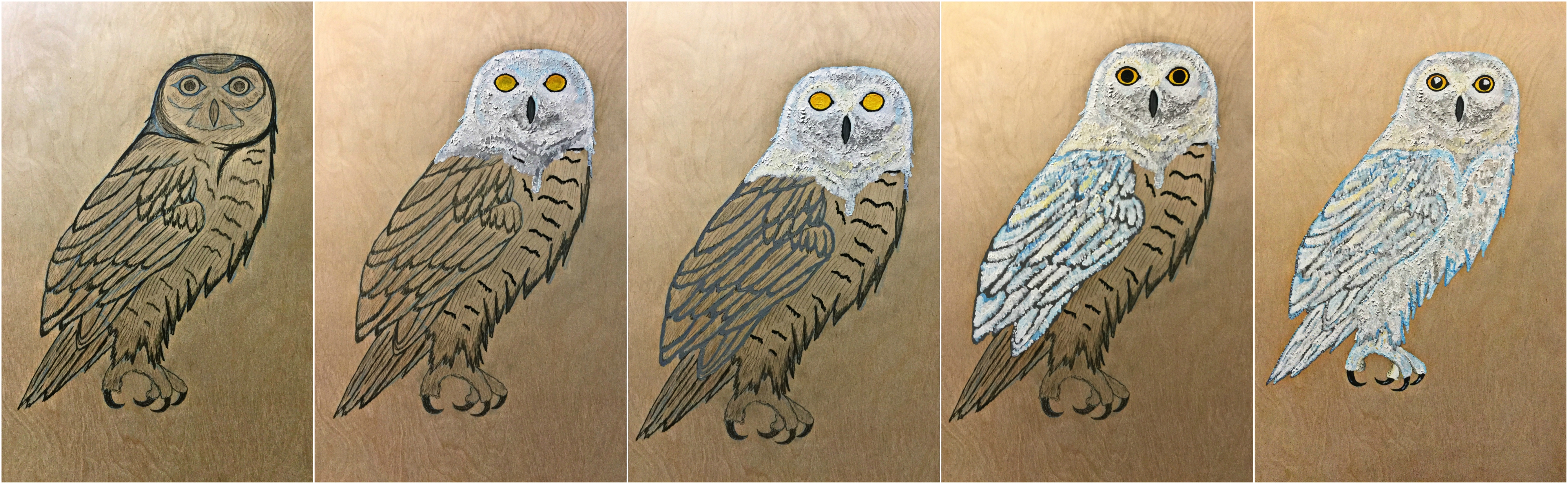
Owls of the World: Snowy Owl

Bubo scandiacus.

One of the easiest to identify owls of the world. Found in the northernmost regions of the planet. The Snowy Owl is truly a unique owl, in its plumage and hunting habits.

Largely diurnal, it does most of its hunting by day. Taking small mammals, mostly lemmings, but also ptarmigans, rabbits, and mice. One snowy owl can take as many as 1,600 lemmings per year.
They hunt from a perch and pursue prey, capturing them with their massive talons. They can also locate prey by ear, even through thick grass and snow.

They lay 3-11 eggs depending on availability of food and have been known to be extremely defensive of their nests. Fighting off wolves and any other predators.
snowy-all
This owl has been on my to-do list for years. It wasn’t until this fall that I felt I had the technical skills to get it done like the others. I used yellows and blues to add some dynamic. This is likely my last owl that I’ll get done here in Oakland. My next few projects will be African raptors, and those will be coming to you from Chicago, Illinois.
I am forever grateful for the time I’ve been able to spend in Oakland, I underestimated its potential, but learned quickly of its heart, passion, and beauty.
I’m excited for the art and adventures to come in the city by the lake.
A heartfelt thank you to all my California friends who have encouraged me to reach this point, both as an artist and as a man.
Thanks for looking at birds with me again. Lots more to come.

Thank you,

Farnco

Sketchbook to ward off the rains

Because the hawks aren’t always in the meadow and the song birds seldom perch on my neighbor’s tree.
So I sit down to piece together my own birds of a feather from pencil, time, and pen.
And sometimes a lightning storm rolls through on a July afternoon. Cooling the air before the fireflies come out and I run to catch them.
If I was locked into a game of perpetual solitaire eye-spy. Then I’m just going to have to carry along a sketch pad to catch whatever falls near me.
It can be my umbrella.
peregrineonaclifffinalcolor.jpg

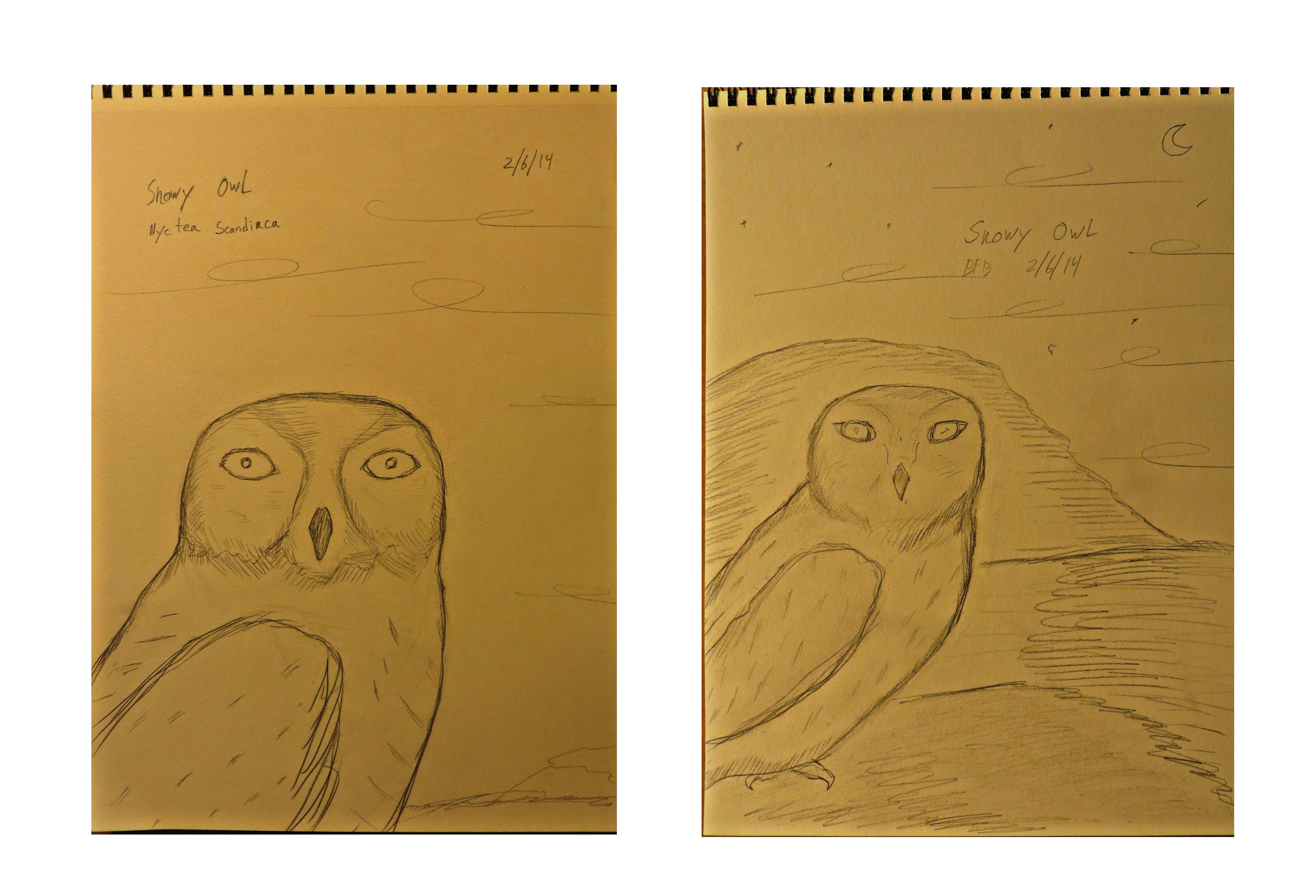
Drawing snowy white birds in a California rain storm.

Rain finally bouncing off the leaves on the tree outside my window. We’ve had a dry winterless winter in much of California. I can hear the grasses on the hills around growing and smiling. Hopefully its enough to keep the whole joint from burning up in wildfire come summer. Rain falls outside, I draw pictures inside. With a gallon of orange juice and a new pen in hand.Snowy Owl sketches in a book of paper.

 
Snowy Owl sketches in a book of paper.


Owls are a favorite subject of mine to observe, sketch, and marvel at. The Snowy Owl is one I have not seen personally. Seems we just don’t share the same territory. I didn’t spend much time in the U.P. in the winter time, which is probably the only place we’d have met.

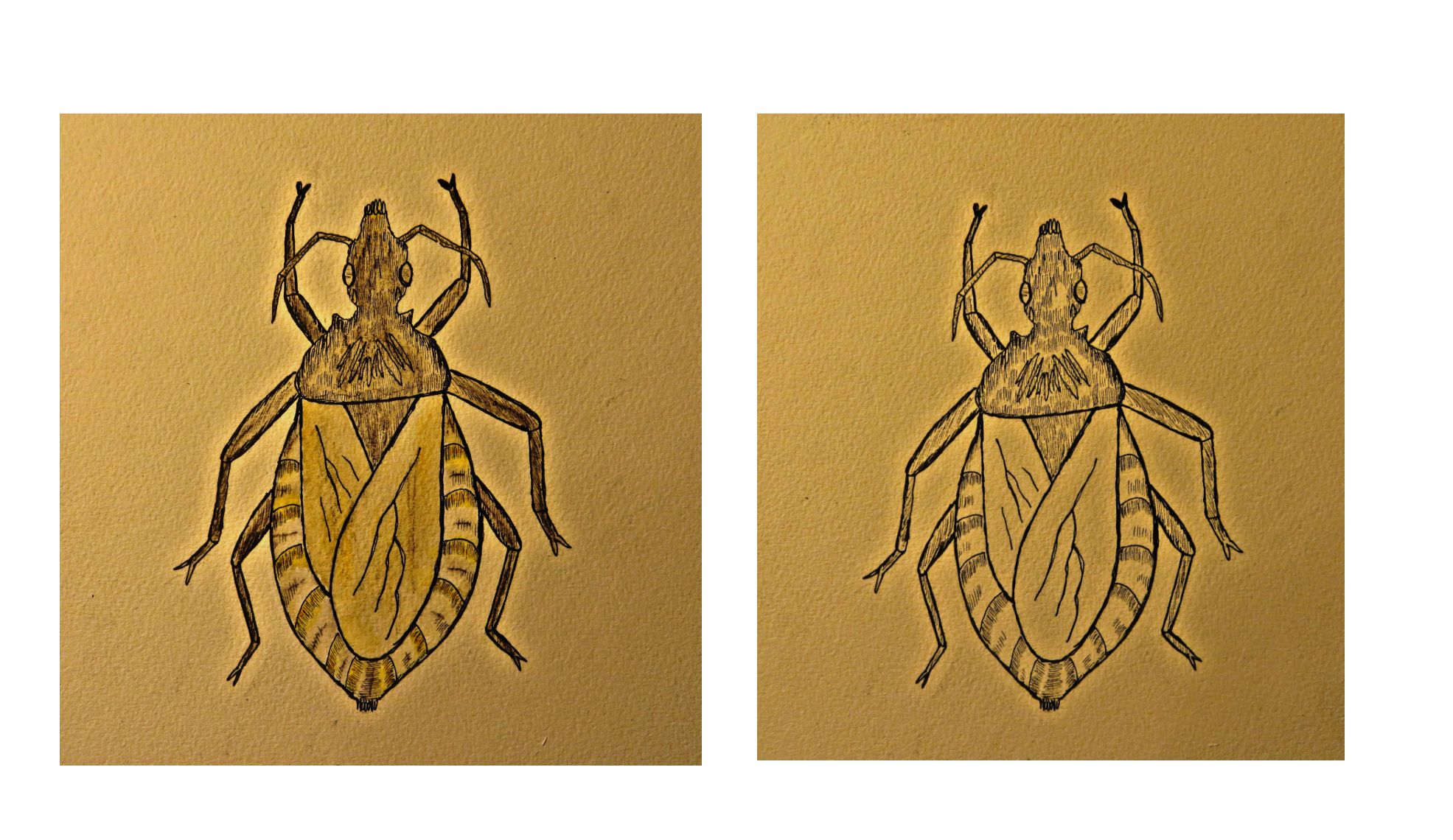
Snowy owl small watercolor illustration study.

Snowy owl small watercolor illustration study.


If one spends lot of time studying something you can pick up on its habits I reckon. Seeing as another Saturday night finds me again writing about, sketching, and coloring drawings of owls. While many of my peers are out at bars, clubs, and the like, I’m on my own perch hunting for the right color and series of lines to track down my wintery bird.

And that’s all right by me.

Fly through the night.

Barn Owl (Tyto Alba).

Barn Owl (Tyto Alba).

It’s been since December that I’ve shared any of my acrylic work. I started this a few months ago and put the finishing touches on it last night. It will be up at a gallery in town here next month.

Working with acrylic versus my usual pen and watercolor brings out a different side of my illustration approach. Paint can allow for a texture otherwise impossible to achieve in pen. I use this concept as my guide for composition and colors. I can exaggerate the colors and light with this medium which I think helps it stand up on its own as a composition.

One of my earliest memories is of my father waking me up one summer in Michigan to see the Northern Lights. That sky has stuck in my brain all these years. As such I wanted to the sky in this piece to hold as much power and emphasis as the bird.

The bird here is a Barn Owl. One of my top 5 favorite birds to illustrate and watch. Every few nights I go out on my bike outside town with lights and ride along fence lines. I usually see at least one Barn Owl per ride. It’s exciting to spot one, often their in flight, or atop a power line pole. Silently scanning the fields for dinner.

Their wings cut with silence through the air. A ghost like face, and beautiful glow. Like no other bird I’ve seen.